
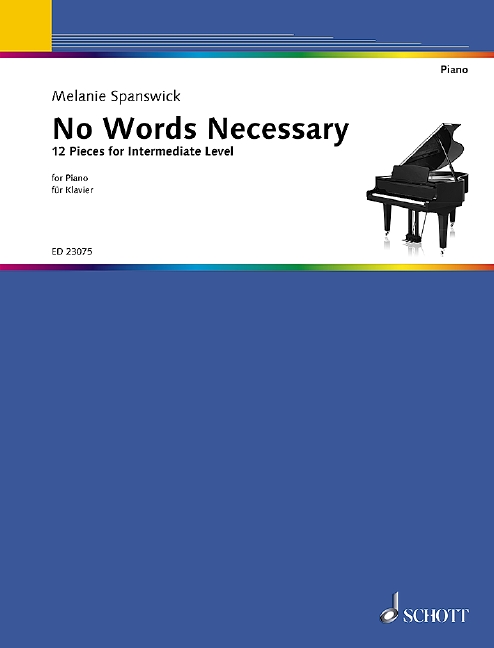
This post is Part 2 in a short series about a recent journey that my piano collection ‘No Words Necessary’ has been undertaking: it has become the focal point of a DMA dissertation. ‘No Words Necessary’, which was published in 2018, has been under musical and theoretical scrutiny in South Korea, where pianist and teacher Juhye Moon has made it her mission to write a complete dissertation featuring my intermediate level ‘minimalist’ style piano music. Juhye was a doctoral student at Hansei University in South Korea, and she has just passed her Doctorate in Piano Pedagogy, which was the first degree of its kind to be established in Korea.
The dissertation, which has taken many months to complete, analyses all twelve pieces in the set from various angles, and discusses their place and pedagogical value in educational piano music, with specific reference to the importance of introducing minimalism and the minimalist style in pedagogy to students at this level. I’m hoping to read the complete thesis in English when it’s available, but, for now, I’ve enjoyed glancing through the Korean version, which features numerous musical examples from the scores. You can read the dissertation’s Abstract by clicking on the pages below:

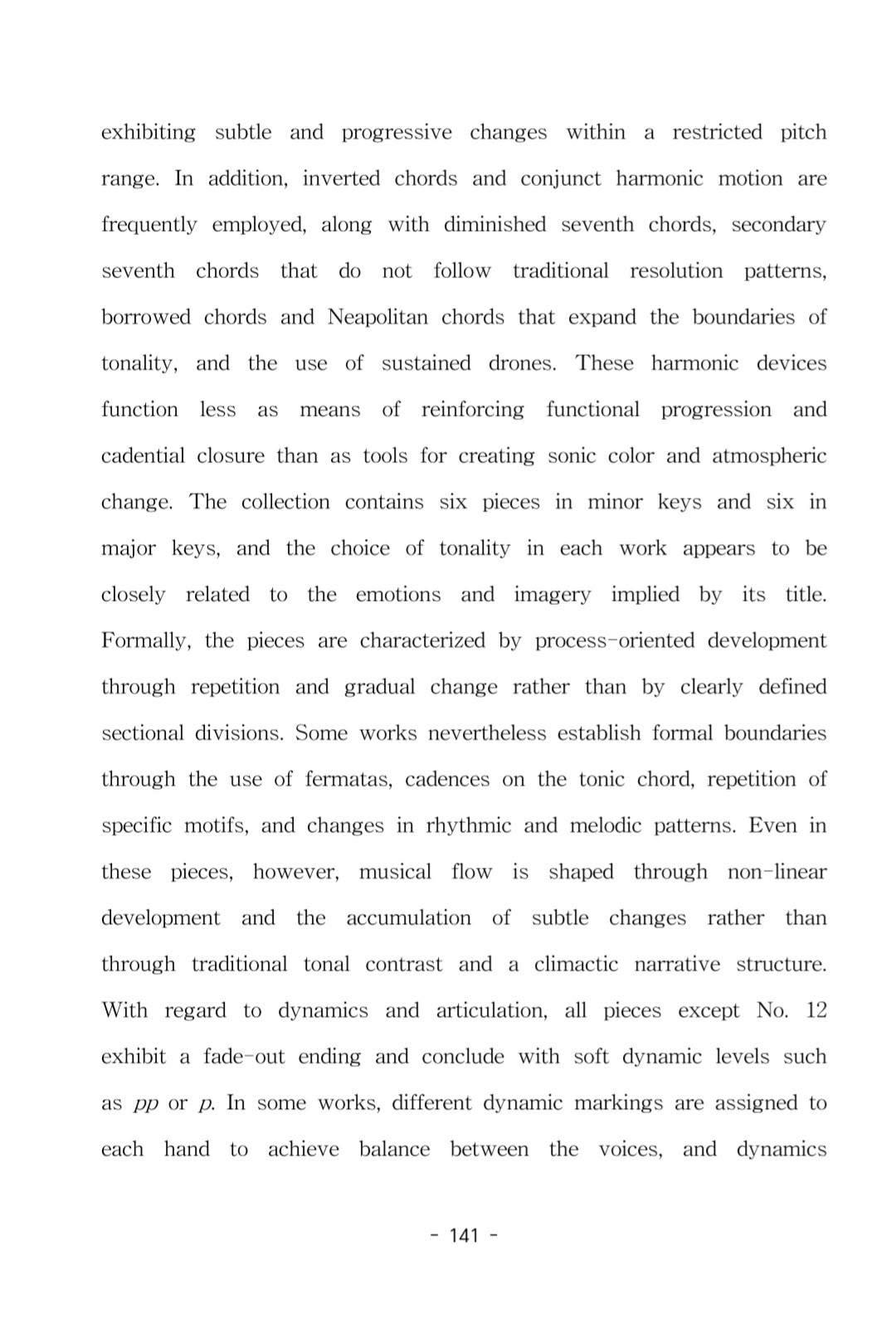
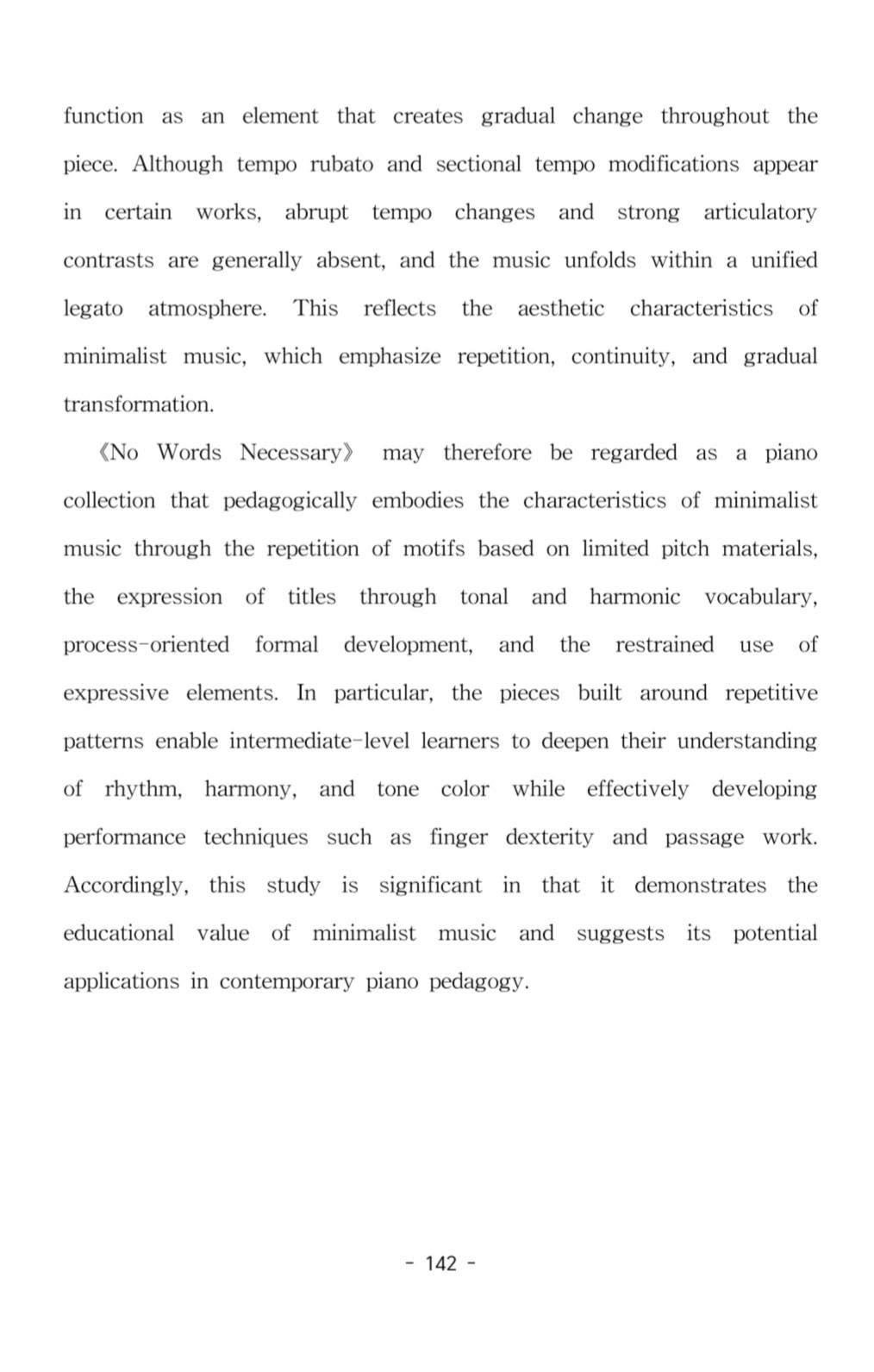
I had no idea that Juhye was writing this dissertation until she contacted me about a year ago. Although I had noticed that she had been following my Instagram page for a long time, and was also aware of Google analytics on this website, where there was, and still is, a steady stream of ‘views’ hailing from South Korea, and particularly one area: I know where all my readers are based – the analytics on these websites are endlessly fascinating. This was a wonderful discovery and, if you read Part 1 of this series, you might be surprised that Juhye discovered my music quite by chance via my ‘Women Composers: A Graded Anthology For Piano’ series (Schott) in a music store in Vienna. (There’s nothing quite like the luxury of browsing in a sheet music shop and this just goes to show the importance of such a shop and how they can change the course of one’s trajectory – both for the teacher, student and the author or composer.)
Juhye Moon, who owns Moon’s Piano Studio in South Korea, was drawn to various aspects of my music: ‘Repeated patterns, gradually evolving rhythms and harmonies, and music that invites us to focus on the sound itself. ‘No Words Necessary’ thoughtfully incorporates the characteristics of minimal music in contemporary piano education.’ She is looking forward to introducing the collection to piano teachers across South Korea, and has since been touring around Korea giving workshops and lectures about my music emphasising the importance of using notation and rhythmic patterns as key aides when learning to play the piano.
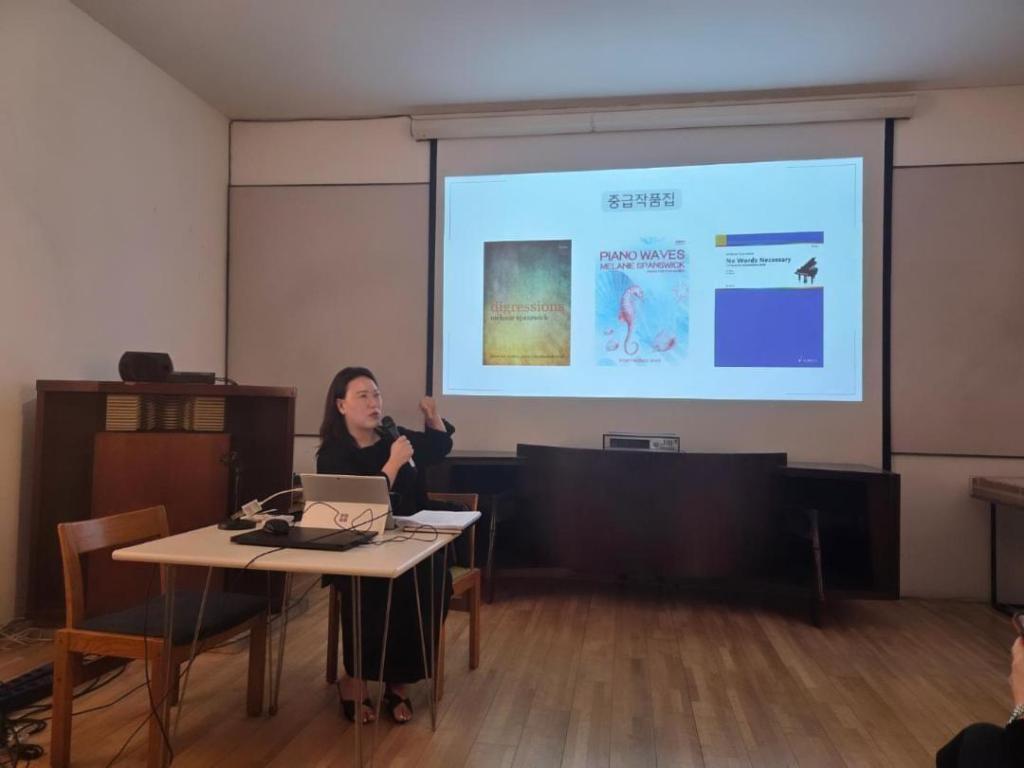
As part of Juhye’s work, she kindly interviewed me about this collection and this interview is also included in her research information at the end of her dissertation. With permission, I’ve published the transcript below:
Juhye Moon’s DMA interview with Melanie Spanswick
- Was there a special reason or influence that made you interested in minimal music?
I started composing quite late in life and it was mainly due to becoming really interested in specific genres of music: minimalism was one of them. I needed to learn how to use music software at the time and, by chance, I became fascinated with the music of Philip Glass, Steve Reich and Elena Kats-Chernin. I routinely listened to their works. The repetitive, meditative style, and particularly the way they varied rhythmic patterns, captured my imagination and I began copying their stylistic traits whilst learning to use the music software. This style became a vehicle for experimentation and it eventually seeped into my piano writing. I enjoy the calmness and stillness found in minimalism: there is something comforting in the use of tonal harmony, repetition and pulsating rhythms.
- No Words Necessary seems very suitable not only for young learners but also for adult learners. Did you think about the age group in advance when composing? And what are the educational goals?
I hope that nearly all my educational music appeals to both adults and children. My approach when writing music is to aim for a universal style, one that encompasses all ages as opposed to focusing on one age group per se. However, when I started to write piano music I quickly realised that adult piano learners were a largely ignored student demographic. They form a substantial group of players worldwide (I host a Facebook group specifically for them called ‘Adult Piano Returners’ and we have nearly 50,000 members), and, irrespective of their current level, they generally prefer to play music free from child-like references.
When I wrote ‘No Words Necessary’, I was aiming for a largely adult piano market, which is why I included the reference to German poet Heinrich Heine at the beginning and why my publisher, Schott, released the book with an intentionally plain bright blue cover. Also, some of the note patterns and chords within a few pieces frequently extend to an octave, which, whilst some children can play with ease, others may find a little challenging. Whereas, adult players with their fully grown hand, can mostly navigate these issues.
My ‘goal’ with this collection is to simply encourage intermediate level pianists to enjoy playing programmatic music, or descriptive music, which is fairly straight-forward, lies well under the hand, and often includes a good tune or appealing harmonic progression.
- Are there any distinctive features or special elements that only ‘No Words Necessary’ contains among your three intermediate collections?
‘No Words Necessary’ is different from my other two collections of intermediate music (‘Digressions’ and ‘Piano Waves’, both published by EVC) from the point of view that the topics or titles that the pieces convey have a deeper meaning: again, this refers back to the Heine quotation at the beginning of the book. ‘Lost in Thought’, ‘Inflections’ and ‘Voices in My Head’ (the first three pieces in the collection) form a good example. Whilst I hope that much of my music encompasses an ‘inner’ meaning, I feel that this collection embodies it more fully. The harmony and note patterns are more adventurous, the language, more chromatic, as I began to spread my wings as a composer.
There is an unspoken ‘rule’ with educational music, particularly piano music, that it should be fairly tonal, approachable and that it must include a ‘nice tune’. I feel this to be a rather dull, outdated concept. Schott gave me permission to start the process of exploring a less traditional idea. This is something that I have continued to develop in my elementary volume ‘Ghostly Piano Tales’ (Schott), and I’m keen to explore more in the future.
- The titles are closely connected to the music. Did you think of the title first or did you think of the music first?
Yes, the titles are connected to the pieces in general. But, in the case of ‘No Words Necessary’, the music came first. I wrote these works whilst I was in Hong Kong adjudicating piano classes at the Hong Kong Schools Festival in 2018. We had fairly substantial lunch breaks in between classes and I had a lovely theatre and piano at my disposal, so I made use of the time and wrote this collection. (I’m returning to adjudicate at this festival in 2027, and so will hopefully be able to write a lot more music in this way.) When I flew back to the UK, I revised the pieces and then gave them their titles, fitting the meaning to the ‘feeling’ of the work. However, as I have progressed with my composing, I now often consider the title or ‘subject’ before I start writing the music.
- Do you have anything you’d like to tell me, who researches and introduces your work?
I have found composing to be a wonderful yet challenging endeavour. As I continue, I find interesting harmony and harmonic shifts becoming increasingly important, and this can be heard in my more recent compositions: ‘Simply Driven’ (published in 2020 by Schott) is a collection of five advanced level piano pieces, several of which use more chromatic harmony than my previous music. The ‘Chakra Suite’ for clarinet and piano and ‘Shamanic Mass’ for flute and piano (both published and to be published by Clifton Edition in 2026) deal with specific topics and I was able to harness my interest in chromaticism in both works, developing a more esoteric style. However, despite this shift, I still rely on minimalist stylistic traits: those of repeating chordal patterns or note shapes and meditative or trance-like rhythmic patterns. I do love this concept and intend to keep it at the forefront of my musical style in the future.
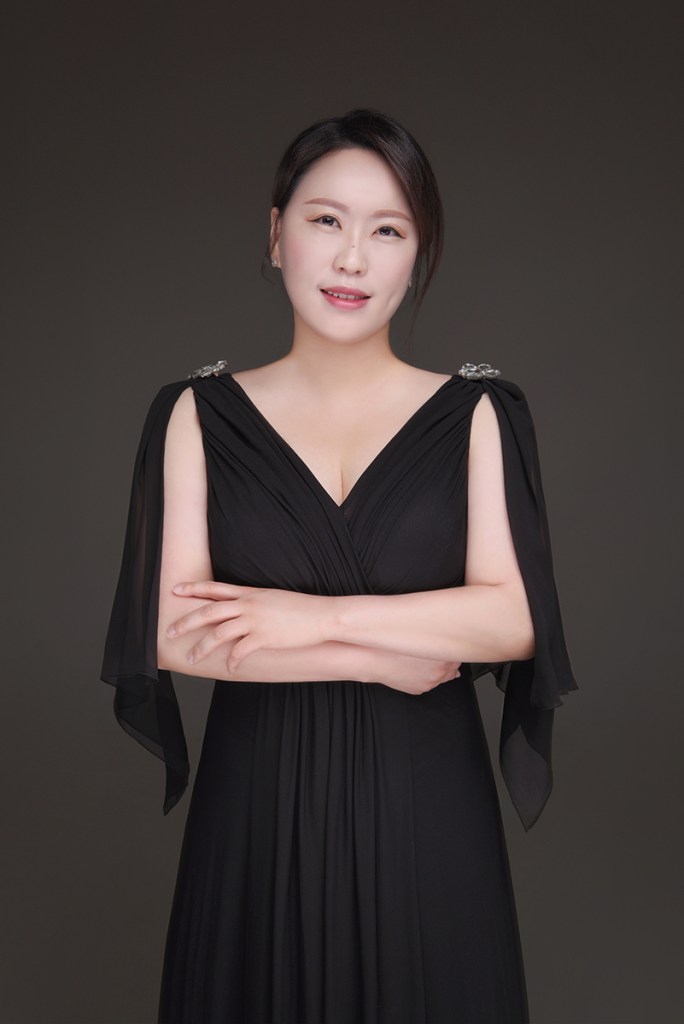
Find Juhye on her blog: www.m.blog.naver.com
Find Juhye on Instagram: @moons_piano
Find out more about these pieces and hear them all by clicking on the button below.
Purchase the score from Schott’s website by clicking here.
Photo by Mathew Schwartz on Unsplash

It was nice to read this second part as well, Melanie.
Thanks for posting!
Martin 🙂
Thank you, Martin! Melanie 🙂