
I’m continuing my series of interviews focusing on piano pedagogy featuring professors and faculty members of universities and music conservatoires around the world. This week’s guest writer and interviewee is American concert pianist and associate professor Frank Huang who works at Miami University based in Ohio, USA.
In part two of this series, Frank answers questions about aspects of his piano study, research, and repertoire.
You studied for your Bachelor’s and Master’s degrees at Juilliard School in New York. How did this experience differ from your previous studies at the Academy of Music Northwest?
The Academy of Music Northwest (AMNW) was a rigorous pre-college programme that prepared me for a career in music. When most kids my age had their Saturdays free, I spent mine taking piano lessons, music theory, literature, and performance classes. The faculty were really first-rate and all specialists in their respective areas. While I was enrolled for the four years I was there, I realised that pursuing a career in music required tremendous passion, dedication, and the willingness to work tirelessly on developing one’s own craft. But this hard work paid off because by the time I enrolled at Juilliard, I had passed out of several music classes—making the transition to college a much smoother process.
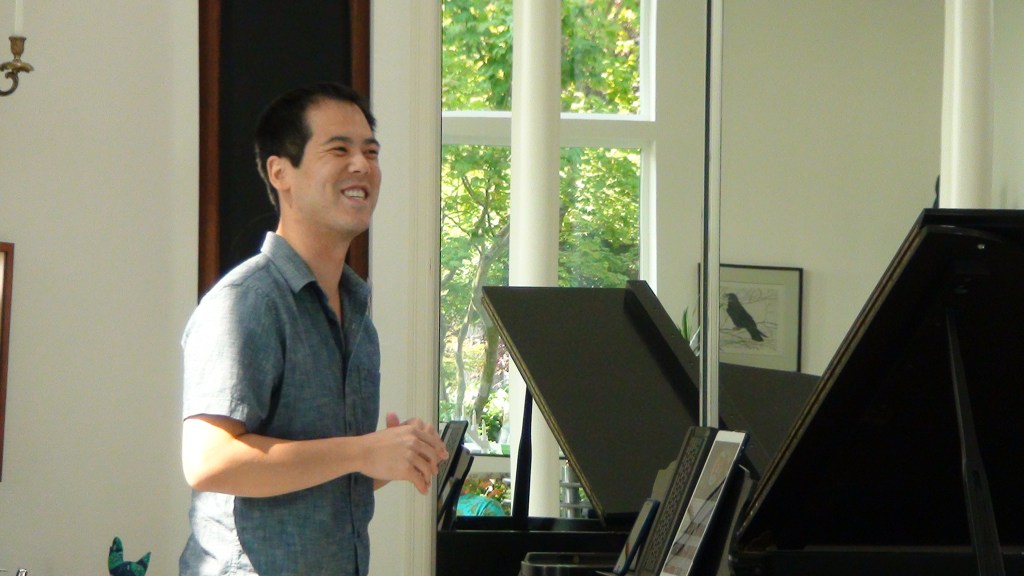
When I enrolled at Juilliard, I was surrounded by inspiring talent around me, particularly my class of pianists that consisted of twelve students. I even knew a few of them already because of our paths crossing previously at various international competitions. The music world was so small! I remember hearing my peers play in a performance class which was like an additional studio class but organised for our own year. Our first year was taught by Jacob Lateiner; the second year was by Martin Canin; and the third and fourth by David Dubal. Each faculty member had a distinct personality, but I will never forget Dubal’s classes. He famously interviewed many of the piano giants such as Glenn Gould, Vladimir Horowitz, and so on. His stories about them were truly fascinating and provided insights about these greats outside of their playing.
Anyway, back to my class of pianists–they all played so well and to be honest, it was quite intimidating! I remember hearing wonderful performances of the most challenging repertoire with such ease and artistry. In this environment, one cannot help but be envious of others’ talents—it’s human nature. Fortunately, over time, I was able to find my support group to learn and grow from one another. I am proud to say that many of my classmates have gone on to lead successful musical careers and it’s great to cheer them on from afar.


My piano lessons with my teacher, Julian Martin, who was influenced by Dorothy Taubman and her principles of forearm rotation, were a transformative experience. I learned so much from him and developed greater comfort and technical ease at the piano. Julian was always ‘matter of fact’ in his lessons. He could be like, “Frank, please get the book from the second shelf, 5/8s from the right” or “your playing would benefit greatly if it was two percent slower.” I found this unusual sense of precision to be excellent in how he described piano technique. During my studies with Julian, he helped prepare me for a number of competitions including National Chopin Piano Competition (Miami, FL) and Artists International Auditions. I won first prize in the latter competition and was engaged to present my debut recital at Carnegie Hall, Weill Recital Hall the following year after I graduated from Juilliard.
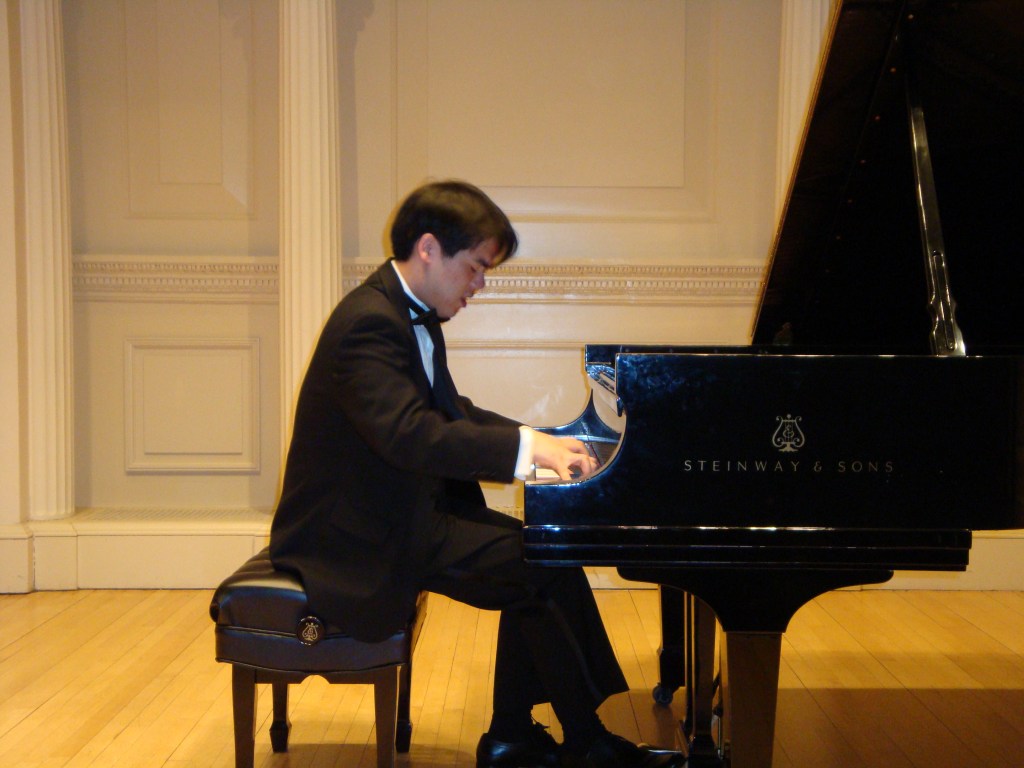
Studio classes were epic. I remember them vividly. They were on Tuesdays at 6:30pm and sometimes they ended somewhere around 10.00pm! There were times we would go out for dinner afterwards or he would bring tasty treats for us to enjoy during class. Occasionally, we would join forces with Yoheved (“Veda”) Kaplinsky’s studio. In my first studio class as a first-year student, I played the Four Stravinsky Etudes, Op. 7 and Julian’s studio happened to consist mostly of upperclassmen and graduate students during that year. Not the smoothest landing, but a great learning experience.

My fondest memories of Juilliard were the lasting experiences that I forged with friends. Attending college in NYC, there was never a shortage of things to do: going to concerts in Lincoln Center, Avery Fisher, Met Opera, Carnegie Hall, perusing the collections in Barnes and Nobles and Tower Records across the street (Tower Records got my account mixed up with another Juilliard student also named Frank Huang, who is now the concertmaster of the NY Philharmonic!), walks along Central Park and Riverside Park, and finding great eats around the city. I loved playing chamber music with friends and playing music for friends.
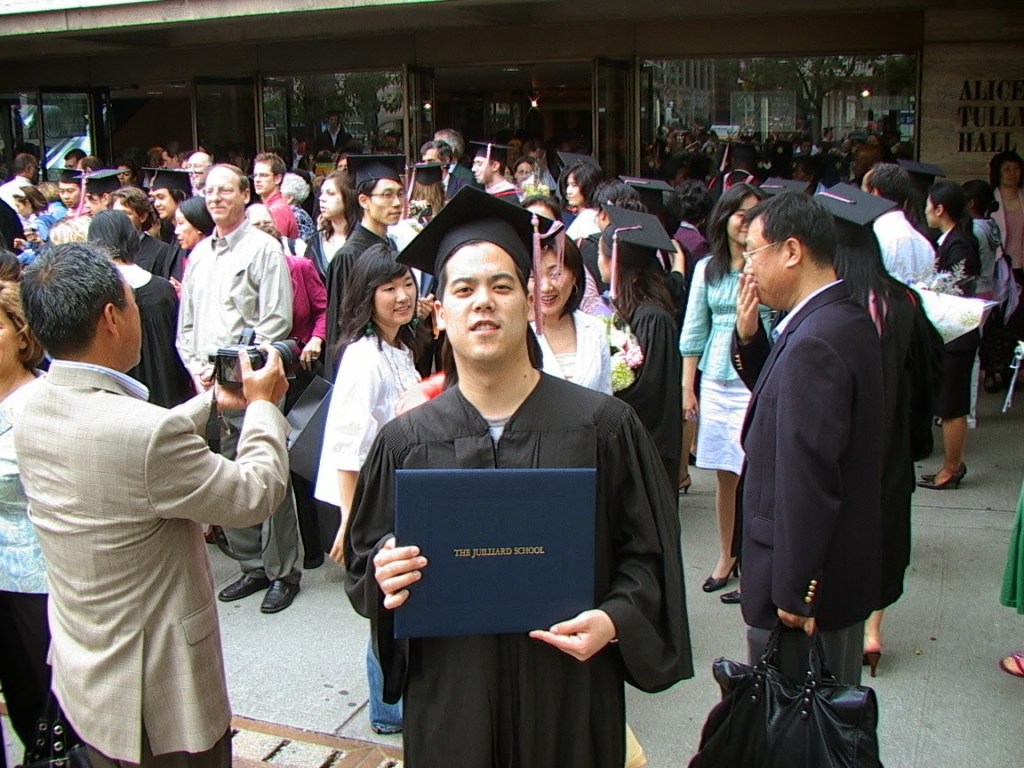
Julian Martin was your professor at Juilliard, a student of Leon Fleisher, how did this lineage influence you musically?
In my lessons with Julian Martin, he would frequently reference Leon Fleisher in a reverent manner. It was clear to me that he had admiration and adoration for his teacher. Sadly, I never had a chance to play for Fleisher, but I had many opportunities to attend his masterclasses and concerts.
In his masterclasses, Fleisher was incredibly intellectual and he often posed questions to students in a Socratic manner. As a teacher, this type of engaging learning environment resonates with me.
Fleisher also had a quirky sense of humour and carefree personality. I recall him rehearsing Beethoven’s Fifth Piano Concerto with the Orpheus Chamber Orchestra at Juilliard. At the end of the 2nd movement, right as the music was transitioning back to Eb Major, he began the last movement humorously in the wrong key of E Major! He went on for a while too, causing the conductor to panic as if he thought Fleisher was genuinely confused. I’ll never forget the grin on his face too which reinforced the notion that making music should be fun! Other memorable Fleisher performances included a Carnegie Hall recital featuring one and two-hand repertoire (Bach-Busoni Chaconne and Schubert B flat Major Sonata, D. 960).
Leon Fleisher’s pianism and pedagogy cannot be understated. His musical lineage stemmed from Artur Schnabel whose recordings of the complete Beethoven Piano Sonatas I admire greatly.
Tell us a little about your time at The Cleveland Institute of Music and how did it differ from your experience at Juilliard?
My experiences between Juilliard and The Cleveland Institute of Music (CIM) differed greatly. Both institutions were instrumental for the various stages of my musical development. At Juilliard, I felt that the school’s curriculum allowed me to focus intensively on performance (especially solo) and when my journey took me to CIM as a doctoral candidate, my musical interests had expanded.
Chamber music studies at CIM made the institution special from coaching with the Cavani String Quartet, CIM’s string quartet in residence, to working with members of The Cleveland Orchestra. I played with violin friends who studied with Bill Preucil, former concertmaster of The Cleveland Orchestra, and Paul Kantor, one of the most important teachers and pedagogues in the violin world. I learned so much about collaborative playing and was taught HOW to listen. One of my chamber music highlights at CIM was that I had the opportunity to perform Brahms Horn Trio with a classmate and the horn professor who was also Principal Horn of The Cleveland Orchestra. I can’t think of too many top-notch institutions where students collaborate with faculty.
At CIM, I also played in a new music ensemble. For one of the concerts, we had Grammy award winning composer, Augusta Read Thomas, come to visit for a mini-residency. I had a good working relationship with her and it led to a recording project of Toft Serenade for violin and piano for Nimbus Alliance Records.
Outside of CIM, teaching continued to grow as a passion outside of performing. I taught as an adjunct faculty member at Cuyahoga Community College while balancing the rigors of doctoral studies. I think I had about fifteen students at one point during an academic year. Now looking back, this was a good exercise in time management and the workload prepared me for a life in academia.
I would be remiss to not highlight how great piano studies were at CIM, specifically working with my professor, Antonio Pompa-Baldi, winner of the 1999 Cleveland International Piano Competition and silver medallist at the 2001 Van Cliburn International Competition. He was a fantastic communicator—describing effectively and concisely what musical issues that needed to be addressed. I loved how he could zoom in and out seamlessly, like a camera, to focus on the microscopic details vs. the larger picture of a work. Equally impressive was his ability to demonstrate his ideas so beautifully at the piano. In one of my lessons, I recall being completely awestruck when he demonstrated passages from Stravinsky’s ‘Petrouchka’ and told me afterwards that he had never played the work before.
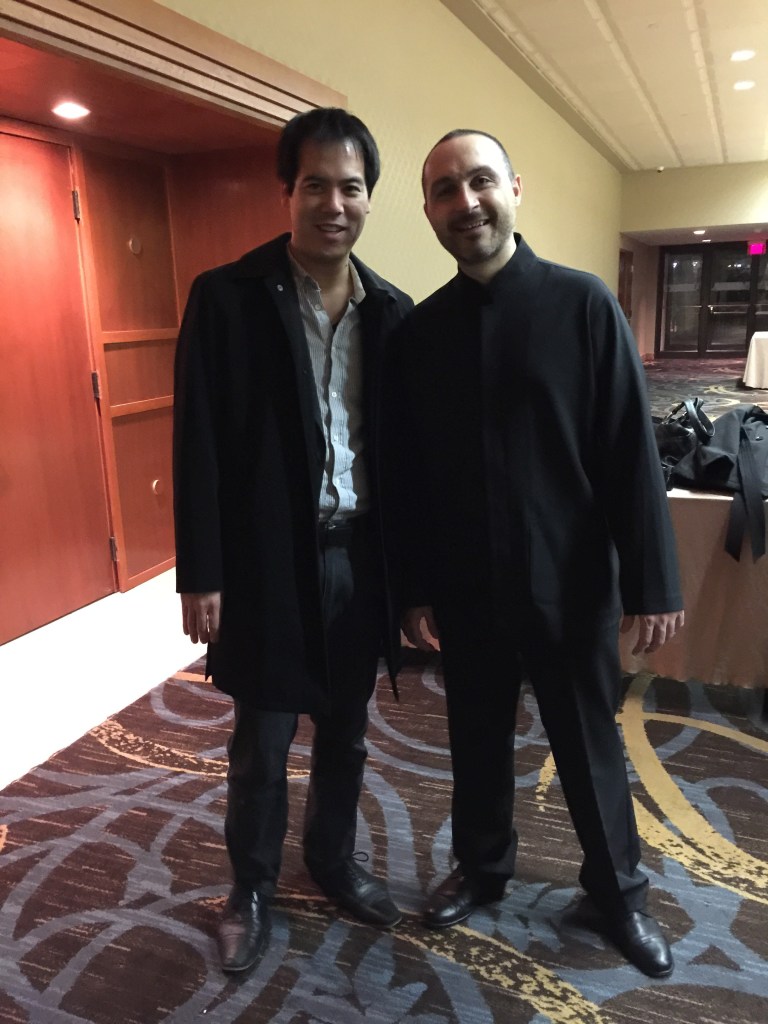
I’d also like to point out that CIM provided an opportunity for piano students to take lessons with other faculty members. I took advantage of this opportunity and played for Daniel Shapiro, who specialised in German music. He was influential in my preparation for my solo debut album release in 2017: Johannes Brahms: Selected Piano Music. Although I never played for Sergei Babayan, a lot of his lessons were open to the public. I learned so much from just observing, especially from his summer music programme, Sergei Babayan Academy. He was a true force as a pianist and teacher.
Lastly, I loved the concert culture at CIM. Faculty members were always presenting high-quality performances at school. I remember Antonio’s performance of the Grieg Concerto with the school orchestra, chamber recital with the Cavani String Quartet (Chausson Concerto for piano, violin, and string quartet), and other fantastic recitals. Another unforgettable performance was Sergei Babayan’s legendary recital of Bach’s Goldberg Variations.
Before I made the decision to move from NYC to Cleveland, my friends asked me at the time, “Why Cleveland?” Indeed, the move would be a culture shock, but it was one of the best career decisions that I made. After studying two programmes over the course of six years in NYC, I needed a change in teacher and environment (don’t get me wrong, I LOVED my time at Juilliard). CIM was that perfect change. I quickly realised that Cleveland, and Ohio in general, had a long tradition of supporting the arts. The fame and prestige of The Cleveland Orchestra were certainly emblematic of this and I was fortunate to attend their concerts (student-discounted prices!) multiple times a month.
What was your research topic for your Doctorate of Music and how have you utilised this research in your career?
While I was at CIM, I grew to appreciate the importance of music theory, specifically its influence on how one might perform or teach a work. This interest led me to work with my theory professor and advisor, Dr. Donald Watts, on my research topic, The Opening Movement of Brahms’ Piano Sonata, Op. 1: Reflective or Progressive? This document also explored a theoretical comparison between Brahms Sonata in C Major, Op. 1 and Beethoven’s Sonata in C Major, Op. 53. I have found that my research has shaped much of my teaching approach. Through exploration and analysis, I help students refine their interpretation as well as gain a deeper understanding and appreciation of the music that they are playing. This approach often leads to inquiry-based instruction with the ultimate goal being that I want students to have ownership and autonomy of their musical decisions.
What is your favourite piano repertoire?
Anything with an ethereal sound world usually captivates me. This is why I generally gravitate towards French 19th and 20th century repertoire because of their wide tonal palette. To borrow an expression from one of my friends and colleagues, Michael Schneider: “as pianists, our tone production is our greatest currency.” I feel that French music allows the piano to showcase its endless tonal capabilities.
I am also drawn to Germanic composers: J.S. Bach and his contrapuntal writing, Mozart and his tuneful melodies, Haydn and Beethoven’s creative thematic art, Brahms and Richard Strauss extending the tradition of their Germanic predecessors, and the list goes on and on…
What repertoire would you love to learn?
This is a never-ending list of pieces that I want to learn…so much fantastic repertoire and not enough time! Last year, I was able to cross Schubert Fantasy for Violin and Piano in C Major, D. 934 off my list. I performed it with my good violinist friend, Lin He, who is Associate Professor of Violin at Louisiana State University. Such a tour de force for both instruments and just excellent chamber writing by Schubert. Another chamber work that I would love to learn is Messiaen’s Quartet for the End of Time—what an evocative piece!
In terms of piano concerti, it has always been my dream to perform Brahms Second Piano Concerto. In my opinion, it’s the greatest piano concerto in our repertoire and it requires musical maturity, technical command and endurance, and sensitive collaboration with the orchestra.
As for solo piano works from the standard repertoire, too many to name here, but Beethoven’s Sonata in Bb Major, Op. 106, “Hammerklavier” ranks high on my list. Messiaen’s Vingt Regards sur l’enfant Jésus is another work that I would love to eventually complete—I currently have three pieces learned from the set. And lastly Chopin Sonata in B Minor, Op. 58 and Schumann Fantasy in C Major, Op. 17, are pieces that I intend to learn someday.
Generally, my creative interests have been taking me recently towards lesser-known works, but I always enjoy mixing standard “blockbusters” in my programme.
Speaking of lesser-known works, you frequently perform Frederic Rzewski’s “The People United Will Never be Defeated!”. What draws you to this music and why does it feature in your recitals?
In my opinion, Frederic Rzewski’s, “The People United Will Never be Defeated!” (1975) or also colloquially known as, “People United” is one of the most important piano works written within the last fifty years. Consisting of a theme and thirty-six virtuosic variations, this blockbuster work is one-hour in length and requires the highest technical demands and endurance of the pianist.
But to me, the work’s importance stems from the theme, a quotation of a famous Chilean protest song with the same title by Sergio Ortega Alvarado and Quilapayun. This song rose to international prominence when Chilean President Salvador Allende, a left-wing socialist, was overthrown and replaced by Augusto Pinochet’s authoritarian military dictatorship in 1973. Since then, this song has been used in protests against oppressive dictatorships.
I was drawn to the music because the work was composed in direct response to a tumultuous event. To me, this is a beautiful illustration that the arts bring us closer to humanity!
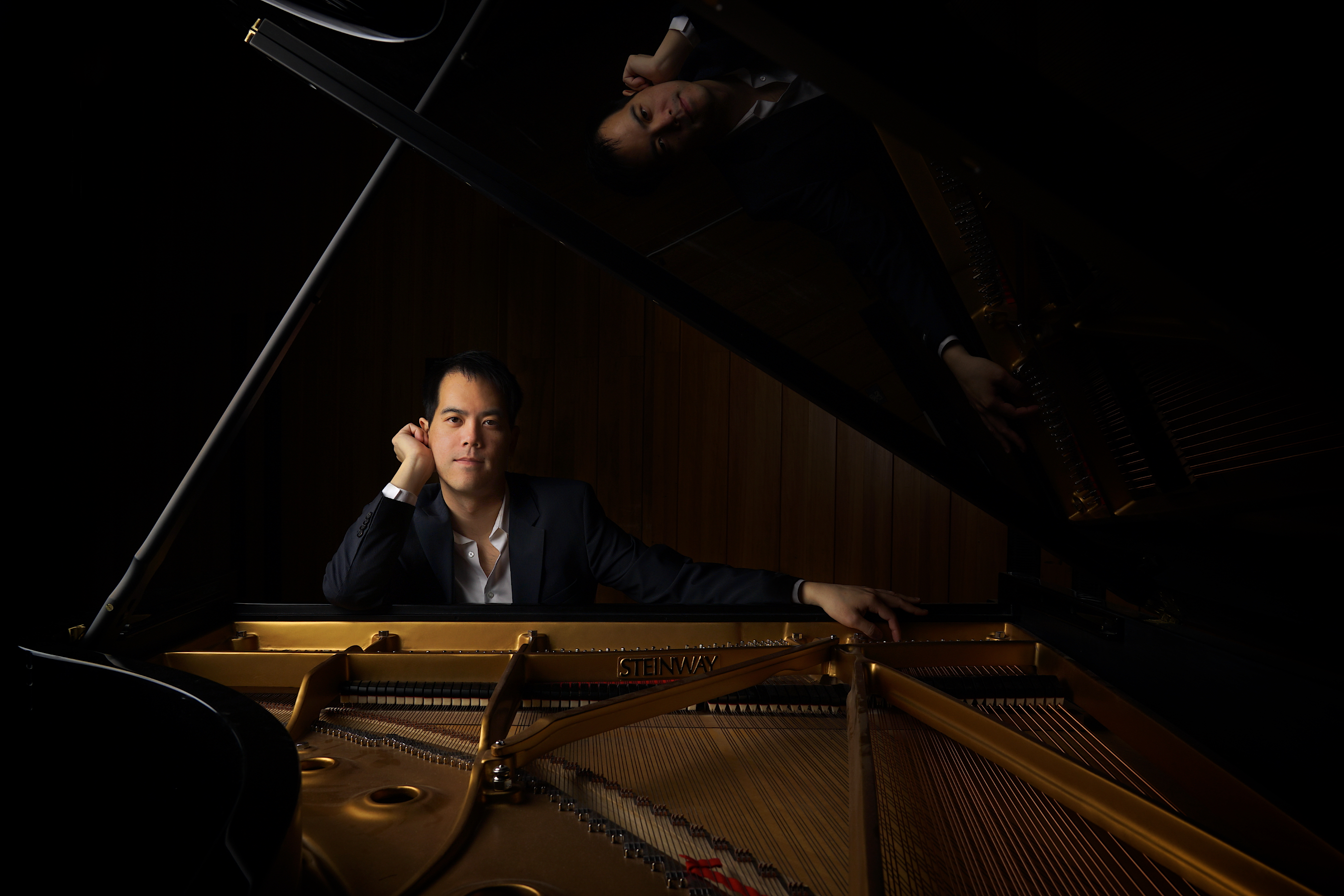
Image: Tina Gutierrez
In Part 3, Frank discusses his performing career.
