
The last few months have been all-consuming, what with the usual end-of-term workload, but when it was finally over, I decided to take an early summer holiday to recharge and revisit old haunts.
Over thirty years ago, I visited Hungary to do some research for what I thought was to be my Master’s degree project and 25,000-word thesis subject: examining the use of folksong in Piano Concerto No. 3 in E major Sz. 119 by Béla Bartók (1881 – 1945). I adore this piece and had already played it by this stage. I’m still not sure what attracts me to this hugely influential Hungarian composer’s style, but I’ve loved it since I was introduced to the final six ‘Dances in Bulgarian Rhythm’ from Book 6 of the epic Mikrokosmos series as one of my music O Level exam ‘set works’ – that’s the GCSE of the day for the younger reader!
In 1991, I travelled to Budapest, where Bartók lived for most of his life, and was fortunate to work briefly with Bartók expert and musicologist László Somfai, who explained much of the background and current research behind Bartók’s concerto: it was especially challenging for the composer to write as, by this time, he was living in New York, had little money, and was seriously ill with the Leukemia from which he died. Written as a surprise birthday gift for his second wife, Ditta Pásztory-Bartók, after the composer’s death, the orchestration was completed by his friend Tibor Serly and the piece was first performed by György Sandor. In complete contrast to the thick texture and biting tonality found in the composer’s earlier two piano concerti, Piano Concerto No. 3’s almost neoclassical simplicity was considered a new departure, perhaps offering a glimpse of what Bartók might have written had he not died at the premature age of 64.
For those new to the piece (you can hear the first recording below), its charms are many: the use of modes features prominently throughout, but especially in the first movement, particularly the Mixolydian, Lydian and Dorian modes, and the composer would often refer to ‘polymodal chromaticism’ in his writing. The main melody is drawn from the Hungarian folk music which the composer loved so much and about which he made impactful studies. Bartók was a keen ethnomusicologist and he frequently toured Hungary, Bulgaria, Romania, and even parts of the Middle East, collecting and cataloging folk songs. The second movement’s ‘Night Music’ is characteristic of the eerie, dissonant nocturnal sounds for which he became known, and which include the imitation of nature, namely insects and birds, and this is framed by a solemn yet uplifting chorale, which, for me, feels akin to a prayer, ominous considering his forthcoming death. The third movement is full of optimism and is really fun to play, and similar to the first movement, its melodies are heavily influenced by folk songs; check out the contrasting central fugato, and this, combined with energetic rhythmic syncopations (again, found in folk songs) give it a joyful and effervescent character not always found in Bartók’s music.
After gathering my information surrounding this piece, I made my way back to the UK only to discover that my proposed topic had – very late in the day, with no prior warning, and after starting my degree course at the Royal College of Music – been rejected by the dissertation panel: it was apparently considered too much of a challenge for the examiners at that time as it was believed that a lot of the information surrounding this piece would only be available in the Hungarian language. Instead, I was instructed to research the piano music of British composer Sir Arthur Bliss. I learned a lot from this process and have no regrets, but the music certainly didn’t tug at my heartstrings as Bartók’s nearly always does. I’ve never written about this unsettling event and remain unconvinced about the reasoning as I don’t speak Hungarian either but was prepared to use a translator to acquire the necessary information.
My recent trip to Budapest was a delightful sojourn down memory lane. I was keen to take a look around the Béla Bartók Conservatory of Music in the heart of the capital and was fortunate that the school’s director, Márta Németh, was available and happy to oblige. The majestic neo-baroque-style ‘palace of music’ (as it’s known) sits in Bartók Square on Nagymezö Tér. At first glance, the building is a little dilapidated, which is a theme across Budapest: there are numerous beautiful baroque and classical-style properties needing some attention – reminders of its turbulent political past, perhaps?
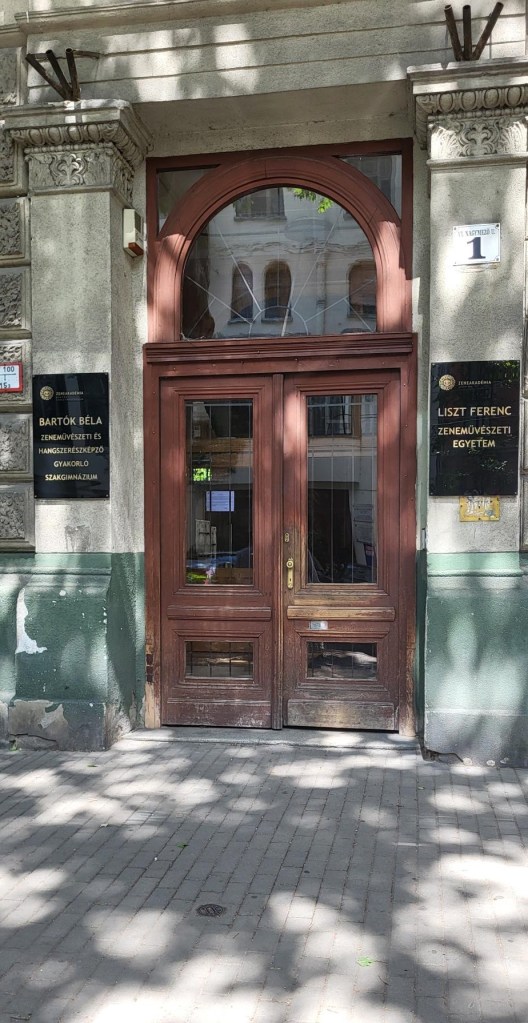
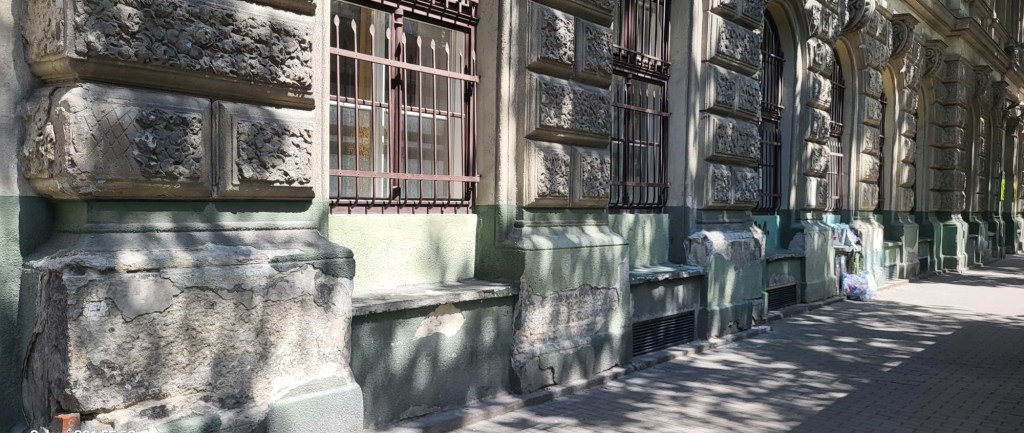
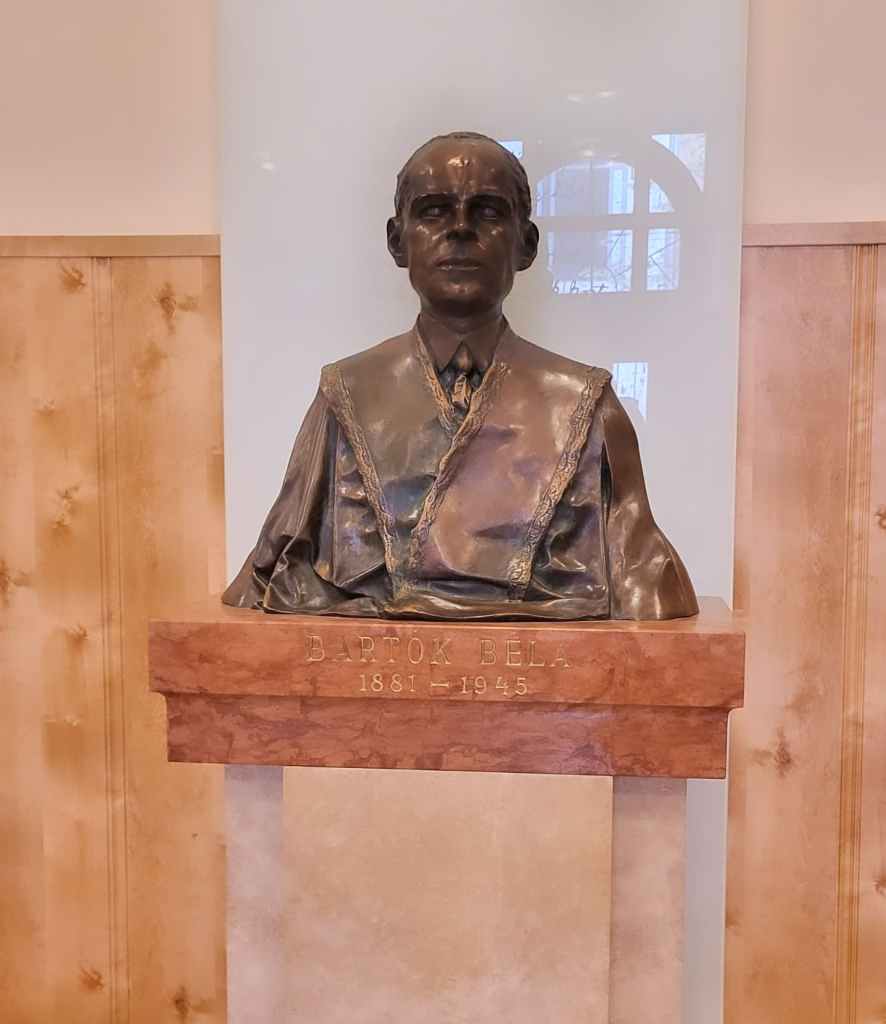
The music school is intended for students aged between 14 and 18, preparing them for music study at a conservatory or university. At present, there are approximately 200 students at the school.
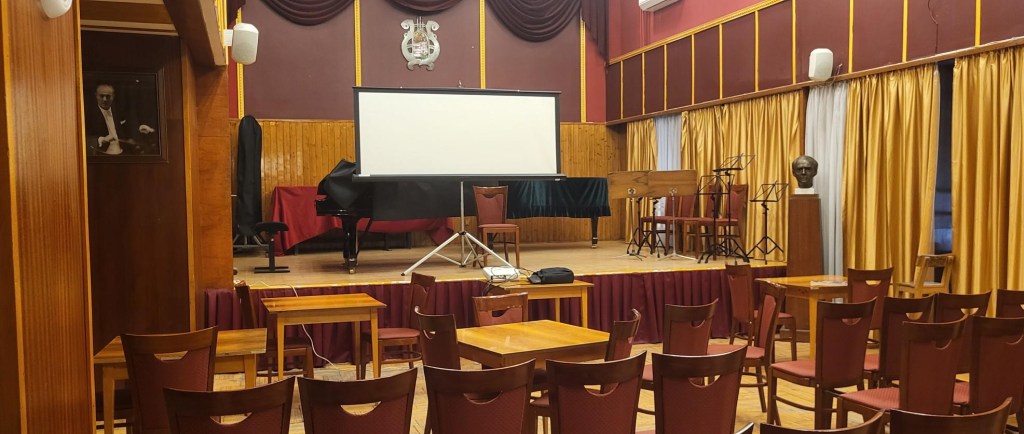
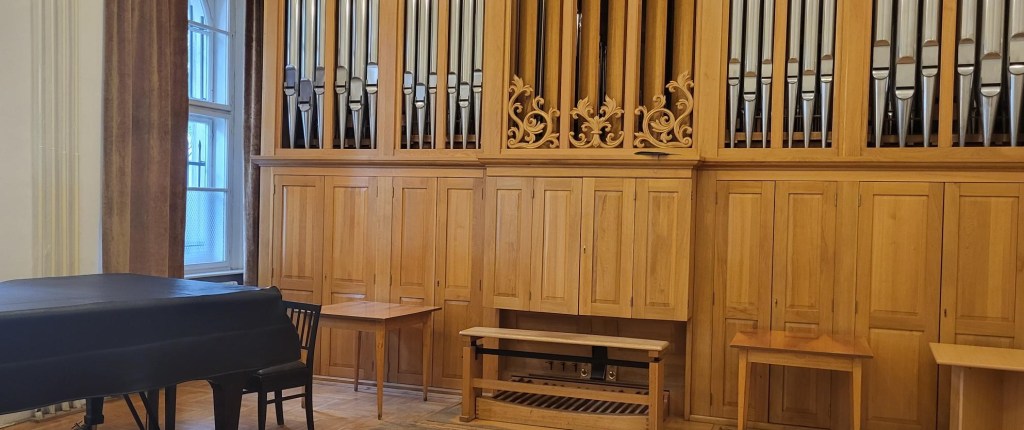
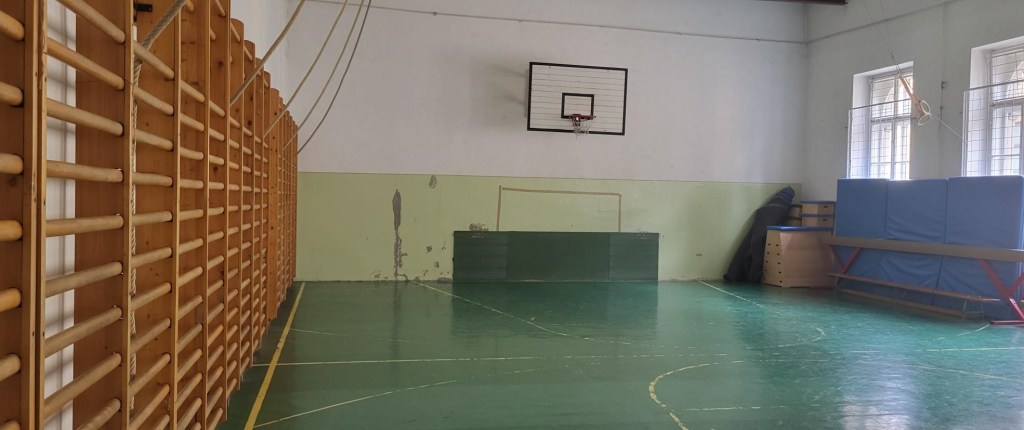
The building, which is spread over several floors, consists of a warren of practice rooms, classrooms, performance spaces including one reasonably sized concert hall, a well-stocked library and even a charming back garden where summer concerts are held. There was no shortage of pianos adorning nearly every room and, from my understanding, much emphasis is placed on learning Solfège and music theory, as might be expected from a country responsible for the Kodály Method, also known as the Kodály Approach (find out more about it here). The study of folk songs is implemented from a young age, too, and the school even has a large gym, as fitness is believed to be an important element in the Hungarian education system.
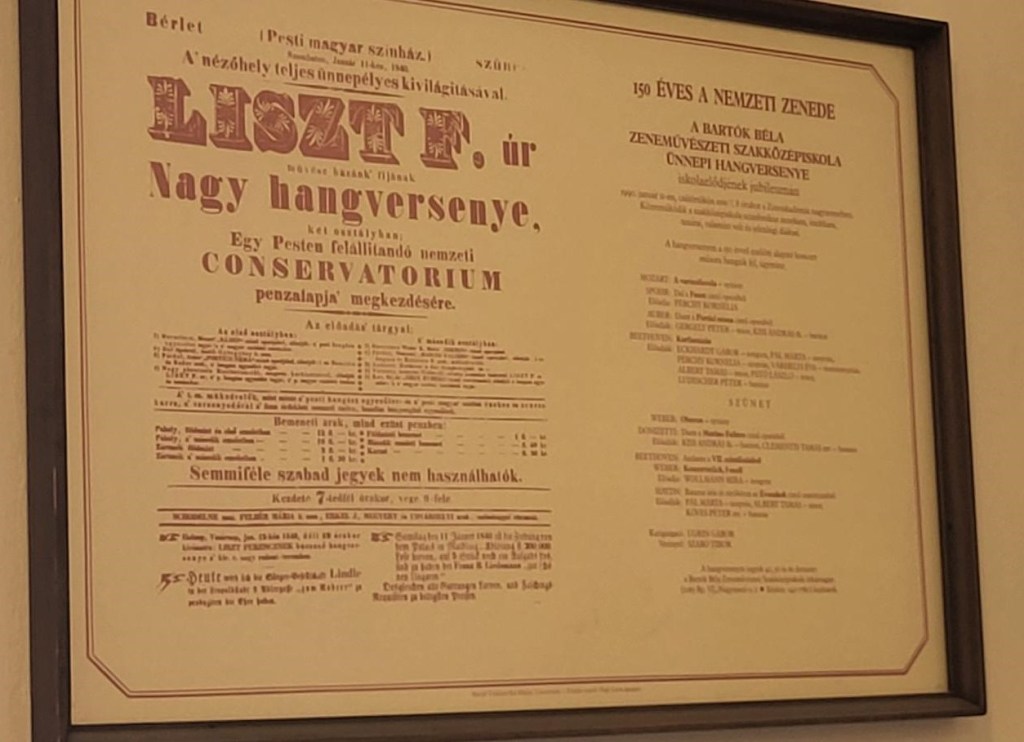

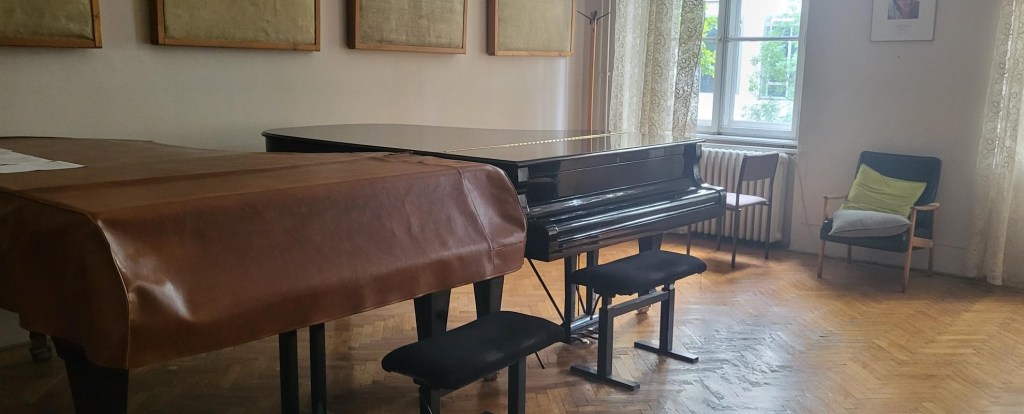
Whilst chatting to Márta, two Hungarian educational fundamentals became clear: firstly, in Hungary all music education is free of charge. It’s all paid for by the government. And secondly, all students who come to study at the music school must speak Hungarian fluently because lessons are only taught in this rather complex language. This will surely discourage many, but Márta was keen to point out that foreign students are increasingly flocking, especially those from the Far East, and in particular China, in preparation for study at the Ferenc Liszt Academy, which sits on the adjacent street – the appropriately named Liszt Ferenc Tér.
I had been to the Liszt Academy before as part of my research, but I hadn’t toured the building, so I joined a public guided tour the next day. This place is grand! It’s impressive and imposing, constructed in an Art-Noveau style and featuring a large statue of the Hungarian composer high above the entrance.

The Ferenc Liszt Academy, which is intended for students undertaking degree programmes, began in 1875 and is currently celebrating its 150th Anniversary. Our guide was most informative and ebullient in her delivery, proudly declaring that the academy hosts over 500 concerts per year. However, I think that number is pretty standard for a music college.
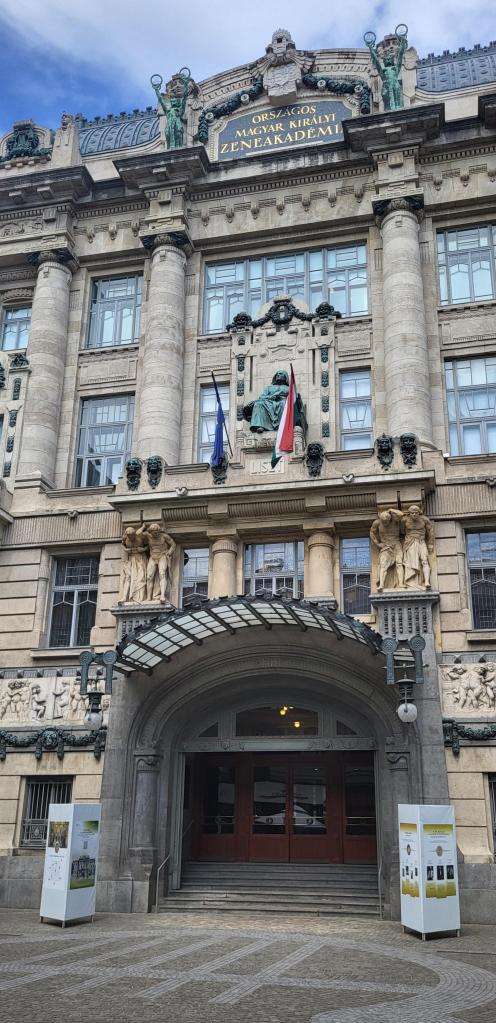

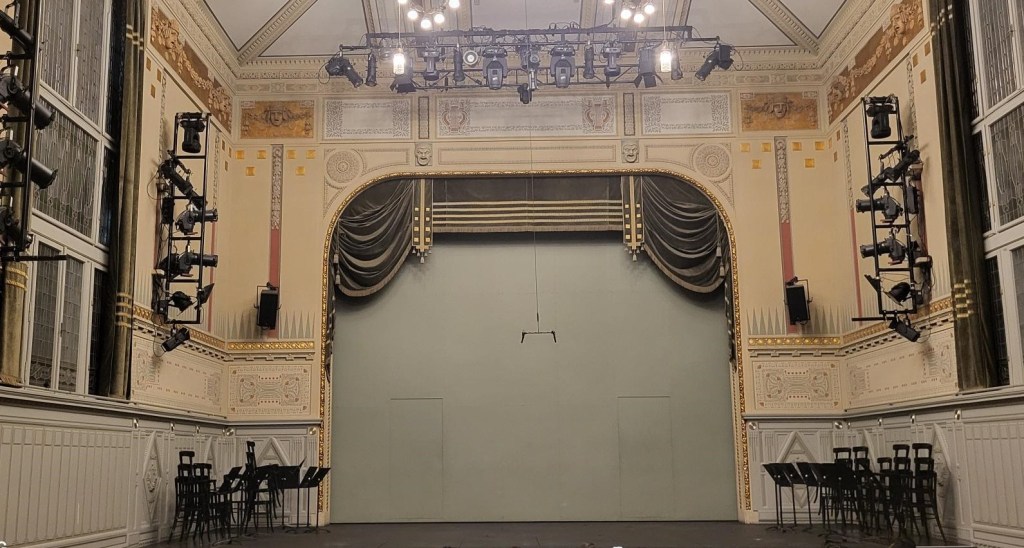
Initially opened by Liszt, the institute began with just five professors and 38 students. By 1907, the new building was completed, and it currently hosts over 200 professors and around 840 students. Always highly placed in music college world-rankings and almost everyone of importance in Hungary’s vibrant classical music scene over the past 150 years has either studied or taught there, including Ferenc Liszt, Ernő Dohnányi, Zoltan Kodaly, Antal Doráti, Ferenc Erkel, György Sebok, Béla Bartók, Janos Starker, György Cziffra, Annie Fischer, Tamás Vásáry, György Ligeti, József Szigeti, Sándor Végh, Jenő Ormándy, György Kurtág, György Sándor, Géza Anda, Louis Kentner, Pál Kadosa, Lili Kraus, György Solti, Zoltán Kocsis, Dezső Ránki, and Andreas Schiff.
We ended our visit with a short but excellent flute and piano recital given by two prize-winning Master’s degree students in the impossibly glamorous, gilded and chandelier-clad concert hall.

Strolling around Budapest, one is constantly aware of the influence of music. Whether in the shape of street names, statues, or concert venues – including the palatial opera house – and even the aptly-named Budapest Ferenc Liszt International Airport, the abundance of classical music in this city should place it firmly on the tourist trail for those seeking a cultural retreat.
If you fancy exploring Bartók’s music further, may I highly recommend Hungaroton’s box set of CDs featuring the composer’s own recordings of his music, released in 1991 and edited by László Somfai and Zoltán Kocsis. The following recording is the first made of Piano Concerto No. 3 and it was released in the same year as the premiere, 1946; both feature pianist György Sándor as soloist, conducted by Jenő Ormándy (Eugene Ormandy) with the Philadelphia Orchestra.
Top image: Featured on the first floor foyer of the Liszt Academy, this is part of a prominent fresco called “The Fountain of Art” by Aladár Körösfői-Kriesch (1863-1920) and it is considered a significant piece of Hungarian Art Nouveau.

Very interesting. I’ve been to Budapest many times, and have attended concerts in various places there including the Liszt Academy.
Thank you. I’m glad you enjoyed the post – and have enjoyed Budapest, many times, too. Melanie