
Today’s post continues my series Piano Pedagogy Spotlight featuring pianist and piano professor James Kirby. Here, we discuss his work as a concert pianist and chamber music player.
Were you tempted to enter the Tchaikovsky competition again, or any other international competitions? And after the competition ended, were you approached for concerts or management in Russia or did you return to London to work?
After the heady excitement of the Tchaikovsky Competition, I realised with a heavy heart that my student days really couldn’t go on for ever so I went to Almaty for a month for a final blast of concerts and unique travel experiences (camping in the Tianshan mountains, fishing in the desert village of Kapchugai, extraordinary meals of camels milk, pig fat, the most delicious watermelons from friends’ dachas….)
I had loved my three Moscow years so much that at one point I had actually contemplated a dual life, half the year in Russia and the other half in the UK, but I came back to the UK. It was wonderful, of course, to be amongst my family and friends but it felt vaguely anti-climactic as well. It felt a bit dull to go to the supermarket and find everything I wanted, and to book a table at a restaurant and to be able to go straight in, without having to fight or make a bribe to get a table.

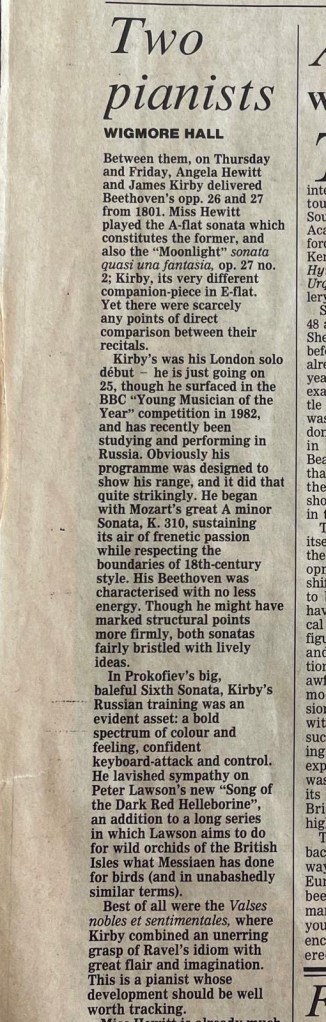
I had been very lucky to have been given a date to make my debut at Wigmore Hall and I had a few solo recitals building up to that. It felt so strange to be without a regular teacher for the first time in my life. It was liberating but I did feel a little rudderless. I decided to use some old chestnuts which had been drilled into me for the Tchaikovsky Competition and learn some new repertoire. My programme was Mozart Sonata in A minor K310, Beethoven Sonata in E flat Op 27/1, The Song of the Dark Red Helleborine by my friend Peter Lawson, Ravel Valses Nobles et Sentimentales, and Prokofiev’s Sixth Sonata. I recollect travelling to Bond Street on the Central Line, feeling hot and clammy with excitement and nerves. The concert went quite well and in those days, reviews appeared almost as a matter of course, and I received nice ones in The Financial Times and Musical Opinion.
Perhaps buoyed on by this, as well as my achievement in the Tchaikovsky Competition, I decided to enter some more competitions, the Queen Elisabeth in Brussels, the Scottish International in Glasgow and the Busoni in Bolzano. I made some foolish decisions here and did not always choose my repertoire wisely, finding myself learning some big pieces too quickly and playing some of them almost for the first time in a big competition. Looking back on this now, I cannot believe that I did this. I always remind myself of this when I am in danger of chastising my students too harshly for doing (or even thinking of doing!) what I actually did.
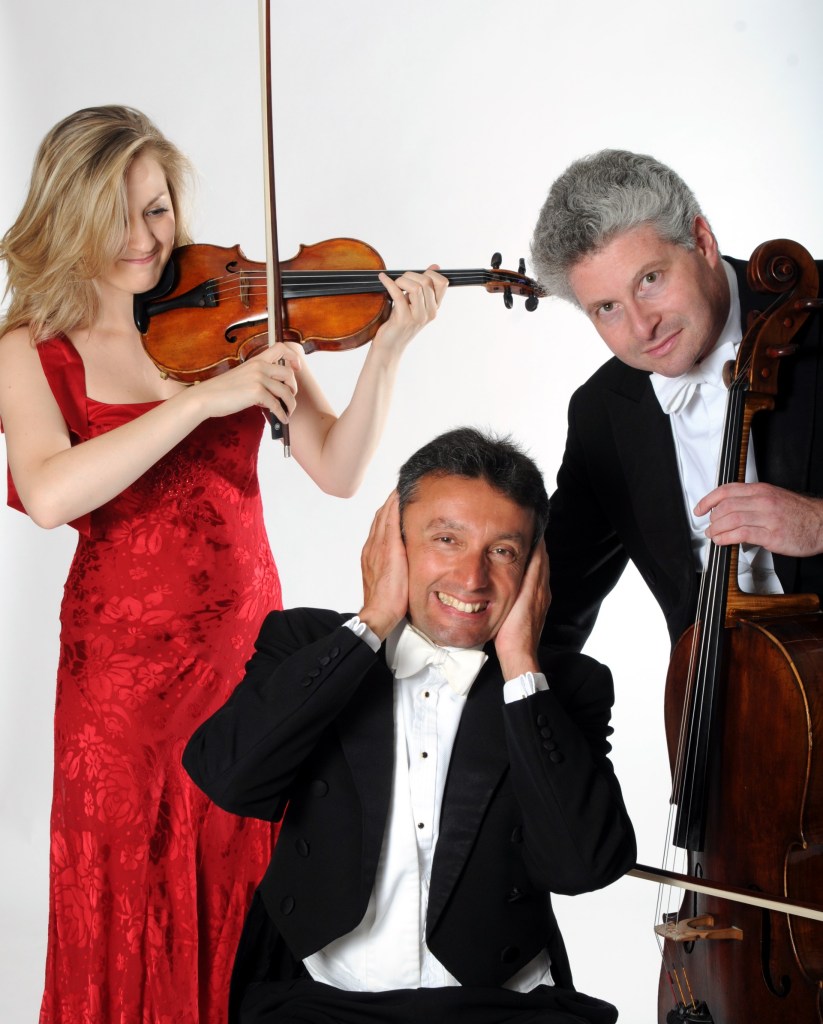
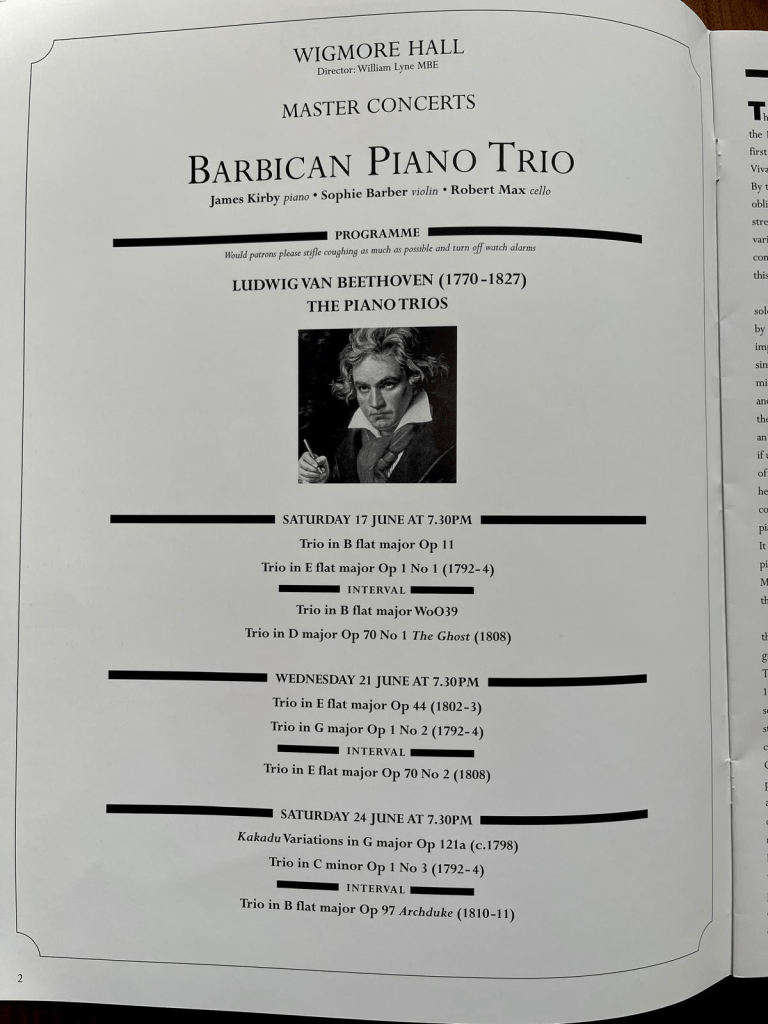
Luckily I had a happier experience in the Citta di Marsala International Piano Competition in Sicily. There was a very fine Russian pianist, Vadim Roudenko who was studying with Sergei Dorensky (who happened to be on the jury!) who was expected to win, but he apparently had some unexpected issues and memory lapses. I felt very relaxed and inspired and won the Competition. Dorensky was not best pleased and after the results were announced he came and glowered at me and said “You played very evenly”. The Dutch member of the jury was much more friendly and he gave me a number of concerts in Holland. I was also awarded a National Federation of Music Societies award which was really valuable as it opened the door to the music club world and gave me twenty five concerts. Music Clubs are incredibly important, both as wonderful experience for musicians (often, but not exclusively, young musicians at the start of their career), and, most importantly, taking high quality music to towns and cities literally all over the country, often giving unique opportunities for many people to hear live music. Of course, if you played well you were often invited back, and often secretaries from other music clubs would come and listen, and there is nothing more powerful than a “word of mouth” recommendation. Around this time I also joined the Barbican Piano Trio and we have had a wonderful thirty odd years playing together, appearing over twenty times at Wigmore Hall, and many prestigious Festivals and Concert series and all over the world.
I found myself with a busy performing career for the next two decades or so. I quickly learned that concerts often come about not just through reputation, but a personal contact or relationship as well as a good deal of luck and coincidences. I think I have been pretty lucky overall, but there are so often frustrations – a really important person being “out of town” on the day of the concert, or being unable to come at the last moment, or another concert in the same town on the same day really affecting your audience. A personal contact produced thirty concerts in Cheltenham over a period of ten years, whereas printing and sending a brochure and sending it to all the music clubs in the land only produced a single concert – which covered the cost of making the brochure! It is very difficult for music clubs, because they usually have six or seven concerts a year, and are completely snowed under with inquiries and requests – one secretary told me that she had three thousand inquiries one year. “All the brochures where the musicians don’t state their fee go straight into the bin” she said sternly.
You have given an amazing array of performances all around the world, what, do you consider, are the highlights of your performing career?
I will always have a very soft spot for The Ballroom at Stamford Arts Centre in Lincolnshire, as this elegant and beautiful venue is where I gave my first full length recital. And key to the early part of my career were Roy and Shirley Kemp, a businessman and his wife (a distinguished piano teacher), who promoted my first Wigmore Recital and enabled me to play concertos with both the English and Scottish Chamber Orchestras. Every performance of Brahms Piano Concerto No 1 has been a highlight, as I love the piece so much, and giving twelve cycles of the Complete Beethoven Piano Trios was a marvellous experience. Performing and recording with the violinist Lydia Mordkovitch was always special – possibly the most “musical” person I have ever worked with. Rehearsals were a total waste of time though, as she always played the concert completely differently from the rehearsal. But the concerts were exciting and inspirational. I loved performing in the Ascension Cathedral in Almaty – always a unique atmosphere – it must be because it is the second tallest wooden building in the world, built entirely without nails.

Opening the season of the Moscow Symphony Orchestra in the Great Hall of the Moscow Conservatoire with my favourite concerto, possibly even my absolutely favourite work, Beethoven 4, was pretty special. Another extraordinary experience was playing Tchaikovsky Concerto No 3 at the Royal Opera House, Covent Garden, accompanying a ballet, and being brought onto the stage afterwards by two ballerinas!
In the 90s and 2000s I played at Wigmore Hall around twenty times, several solo recitals and often with the Barbican Trio and friends. I remember feeling completely exhausted, yet emotionally fulfilled after finishing a solo recital with Liszt’s Annees de Pelerinages Book 1. I was also brave (foolish) enough to have a go at the Busoni Toccata there, too.
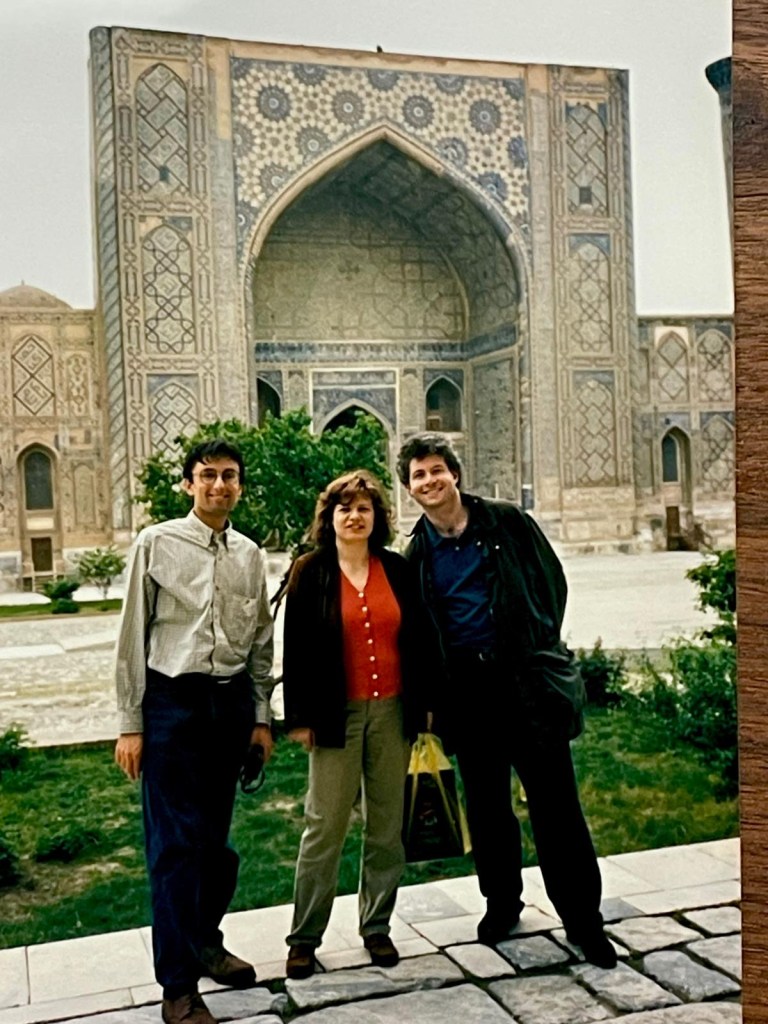
Around this time I made many expeditions to Romania and Russia with my great friend Robert Max. These were certainly not money making trips – when we went to Romania, the fee for our weeks work barely covered our car parking charge at Stansted Airport, but I have very many happy memories of working with Robert on many different concertos, playing lots of chamber music and just as importantly, forming many precious friendships and connections, a considerable of them continuing to this day.
What is your favourite solo piano repertoire and why?
Of course, the correct answer should be “anything I am playing at the moment”, but I have to agree with Schnabel when he said that he was interested in music that is “better than it can be played”. So, pretty much all of the Beethoven Sonatas and many works by Mozart, Schubert and Haydn. I love Chopin’s late works, the great works by Liszt (Sonata, Années de pèlerinage, Funérailles, Ballades, Legends, Fantasy and fugue on BACH), Mussorgsky’s Pictures at an Exhibition and the piano works of Tchaikovsky, which I feel are still neglected. Recently I have been enjoying playing pieces by Debussy. I am painfully aware that this list is very boring, but quite simply, I love playing pieces which I cannot get to the bottom of.

What pieces, or composers, have you yet to tackle?
I intended to perform all Beethoven’s Sonatas by the age of forty. I am now almost two decades behind schedule with three more to learn (Op 2/1, 49/1 and 49/2). I’m sure that you will agree that this is a very strange list – I have taught Op 2/1 so many times that I could almost play it by ear in a concert – maybe if someone dares me, I will try. Clearly I could learn these pieces and complete the project, but there is obviously something in me which doesn’t want to finish the Beethoven sonatas! I have played most of Brahms’ big chamber pieces, but not a single solo work! This is being rectified as I write. And Debussy’s etudes – enigmatic and difficult to get into my head. There are some pieces which I love, but am slightly too lazy to learn, so a good way of having a relationship with them is to teach them. I’m certainly not going to tell you which pieces I mean, but you are very welcome to come and spy on my teaching anytime!
I have performed a huge number of piano trios, quartets and quintets (over seventy), but there are still gaps. I would love to do Medtner’s Piano Quintet, and although I have played Mozart’s Piano Quartet in E flat K493 many times, I have never done the G minor K478. I could go on and on. There are also huge gaps in my violin/piano and cello/piano repertoire. Do get in touch if interested!
As a member of the Barbican Piano Trio, how do you view the role of the piano in chamber music and do you think it’s given the distinction that it deserves?
Well, I have joked with my colleagues that we should be paid in proportion to the number of notes we have to play, but sadly they don’t seem to agree with me. But, joking apart, the role of the piano cannot be underestimated – it is the glue which binds the music together. It’s always fascinating and absolutely necessary to explore texturing and layering of sound in chamber music, and to consider which musical lines should be the leading ones. It’s sometimes not straightforward and there are many passages in well-known works where we have still been unable to be certain about the individual roles of the instruments. Use of the pedal in chamber music needs careful thought and exploration – sometimes we can use much less, and change pedal more frequently, especially in works where the texture can be particularly thick and dense (some Schumann and Brahms, for example).
I always play with the lid full up (I have had many fights with concert organisers about this, most frequently in Eastern Europe). With the piano lid up, the sound is so obviously better, but of course, we must take great care with regard to balance, particularly, in fact in Wigmore Hall, where the piano is quite large in relation to the space. The piano often has the lion’s share of the melodies, but I had an interesting challenge recently, learning Faure’s First Piano Quintet, where, in thirty minutes of music, the piano barely has a single tune. I found it quite disorientating and difficult to learn. But what a wonderful piece!
In your trio, how do you select repertoire and is there any particular criteria?
The Piano Trio repertoire is spectacularly good but slightly tricky to programme, in the sense that the majority of pieces are big, but not enormous, often about twenty five minutes long. So a Trio concert can feel rather like a meal which starts with a rack of lamb, followed by pork belly and ending with a sirloin steak. Balancing and contrasting music is very important. Some trios such as Schumann D minor, Brahms C major and Ravel, feel big but are not always quite long enough for a second half. It is good to have a weaponry of short or shortish pieces which can precede a longer piece, (there are works by Beethoven, Schubert, Suk, Martinu, Rachmaninov). I enjoy non-chronological programmes – our most recent programme was Rachmaninov, Mozart and Brahms.
There is an absolutely vast array of obscure piano trios, and we have spent many happy hours playing through many of them, but we have often concluded that they are obscure for a reason. Exceptional discoveries for us have been the Piano Trio, Quartet and Quintets by Taneyev and on a completely different note, Paul Schoenfield’s Café Music.
What is your approach to practising?
Don’t start learning a piece too soon before the concert. When I look back at the ”landscape” of the repertoire I have learned over the years, it is crystal clear to me which ones I have learned thoroughly and carefully and which ones I have learned carelessly or too quickly.
It makes a huge difference to me whether or not I “know” the piece before I learn it. Most pieces I do know, through listening or teaching, but it is a very interesting challenge, and feels very different learning a piece I don’t know so well in my head. A recent challenge has been Debussy’s etudes in fourths and sixths. When I start to learn a piece I play through it a few times (but not too many), deliberately aiming for a general rather than a detailed picture, I suppose, rather like as sculptor beginning to carve their block of marble (hopefully not concrete). Then I go gradually into more depth and detail, thinking about tempo, hand movements and fingering (definitely in that particular order), but not completely committing to some of the fingerings for a few days at least. I think I get through just as many rubbers as pencils!
I don’t always start my practice at the beginning of a piece and never listen to recordings during the main learning process, although I certainly do both before and afterwards.
Can you share what you have found is the one most important practice tip?
Three things (not my own, sadly):
Listen is an anagram of silent. (Alfred Brendel)
Think ten times – play once. (Georgy Sebok)
Never play carelessly, even when there is nobody listening, or the occasion seems unimportant. (Ferruccio Busoni)

In Part 4, James takes us on a fascinating journey through one of his many Russian concert tours.
Top Image: Accompanying!

Hello Melanie,
I again enjoyed this third article , and especially the sound clip of the Barbican Piano Trio.
Very nice performance!
Thank you 😉
Thank you, Martin. I’m delighted that you are enjoying this series. The Trio clip is inspiring, isn’t it? 🙂
Yes for sure and I will also listen to the 14 other recordings on the Internet. 🙂
That’s great. I’m sure you will enjoy them all 🙂