
Wishing all my readers a very happy festive season
As the year draws to a close, I’m focusing on my favourite books of 2025. I’d like to highlight the following five books which I’ve really enjoyed reading. This is a rather random collection of fiction and non-fiction; some were published in 2025 whilst others are much older. Not all are music-related, and they are listed in the order in which I read them.
The Creative Habit by Twyla Tharp (Simon & Schuster: 2003)
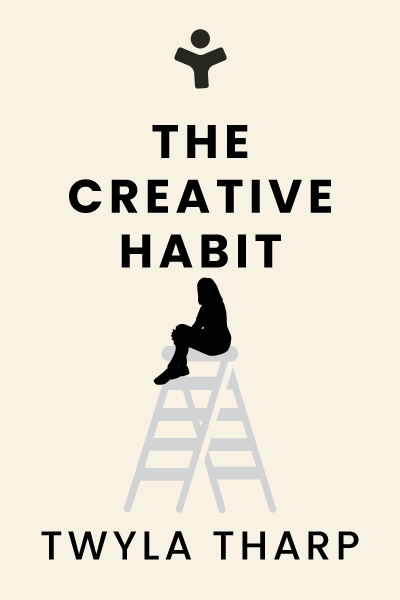
This is an oldie but a goodie! I try to read at least one personal development book per year and this book has kept me on my creative toes during 2025. Celebrated choreographer Twyla Tharp lives and works in New York City, and has created more than 130 dances for her company as well as for the Joffrey Ballet, The New York City Ballet, Paris Opera Ballet, London’s Royal Ballet, and American Ballet Theatre. Her work has won countless awards, and as you might imagine, Tharp has a thing or two to say about developing the ideal life ‘habits’, encouraging success, well-being, and creativity to stand you in good stead for a future in the arts, or indeed any profession.
Some of the advice might be thought of as ‘common sense’ but Tharp’s prose runs much deeper than that. She insists that success and creativity are not merely borne out of luck, and they are certainly not sent from God either. Instead, she firmly believes that one must cultivate success through repeated habits and repeated mind-work. I agree with her. She comes across as a rather strict disciplinarian of the sort that I would have appreciated when I was a student. Tharp’s own dedication, self-belief and commitment shine throughout every page: ‘In order to be creative, you have to know how to prepare to be creative’, she says. Too right. One quickly comes to appreciate the tireless effort required which she has applied throughout her life in order to have any success at all. It’s an inspiring story which she peppers with interesting, quirky anecdotes and stories to keep you amused.
This hefty tome not only offers a shed load of advice, but also a ‘failsafe’ series of practical exercises which Tharp has employed for all her creative projects, and they became particularly important when she was stuck in a ‘rut’ and unable to see the wood for the trees, as she muses. The book contains more than thirty exercises to ease the fears of anyone facing a blank page or a blank beginning, offering the opportunity to open the mind to new possibilities — whether you are a novice or an expert. Careful organisation, self-knowledge, rituals and positive memories, all contribute to a happy outcome. You’ll find this an eye-opening read and it’s the perfect accompaniment to your new year resolutions…
Get your copy by clicking here.
Cat Brushing by Jane Campbell (Riverun/Quercus: 2023)
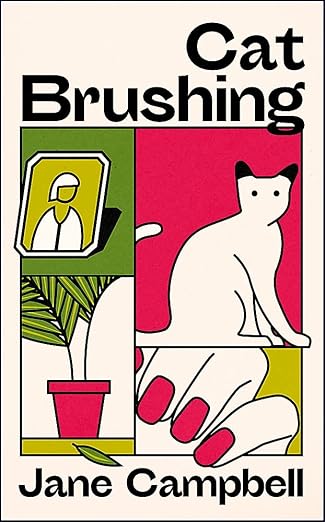
I’m a sucker for a fictional short story. I read this book whilst adjudicating at a music festival for a week on the Isle of Man earlier this year. It was nice to be able to immerse oneself in a quick read and know how the story unfolds by the end of one intense reading session.
I was drawn to this volume because it focuses on the oft-forgotten topic of the ‘mature’ woman. Campbell, who falls into this category herself, only began her writing career in 2017, at the age of 77, after working for many years as a Group Analyst, and Cat Brushing is her debut collection. Consisting of thirteen short stories, each one explores a women’s ‘lot’, the majority of whom, for various reasons, have been disempowered in some way, often due to their age. Compellingly written, Campbell writes from her heart and some of the tales will ‘shock and comfort’ in equal measure; her heroines are fighting to live on their own terms, often desiring to be free from well-meaning relatives and families. Sometimes they look back at their lives with pleasure, passion and fond memories, and at other times, with despair and frustration, wondering what they should or could have done differently.
The stories investigate the need for companionship, sensuality, freedom, integrity, and a sense of self within each of the thirteen women featured, some of whom divulge their romantic feelings for men (both younger and older, husbands and lovers), others, for women, and, as in the case of the first story, one protagonist debates the apparent needs of her cat. Each tale offers the opportunity to consider women in their twilight years somewhat disparately to how they are generally perceived. It’s well worth a read if you want to understand the minds and perspectives of your older female friends and relatives. I also appreciated the nice typesetting with larger font size and paragraph spacing.
Get your copy by clicking here.
Myra Hess: National Treasure by Jessica Duchen (Kahn & Averill: 2025)

This book has been billed as the final ‘definitive’ biography, and the first for nearly 50 years, of the pianist famous for establishing her concert series held at the National Gallery during the Second World War. Few pianists are as revered and universally loved as Dame Myra, which becomes quite clear through Jessica Duchen’s direct, frank yet sympathetic prose coupled with meticulously sourced and splendidly detailed information and documentation, much of it previously unseen. Myra Hess’s journey is viewed through honest eyes and, due to this, one can’t help but like and empathise with our heroine and her plight.
As with many important historical figures, their beginnings are often the most interesting part of their journey. Hess’s determination, motivation, sheer character and necessary humour, shine through from the start, and it took many frustrating years before she was ‘known’ on the concert stage. Throughout her life she battled serious concert nerves and anxiety, bouts of depression, touring as well as agent/manager issues, and a double mastectomy, alongside the ever present problem of being a woman in a man’s world. Perhaps not much has changed since the 1950s?
But it becomes clear just how much Hess was admired and respected by her friends and colleagues, and, through her numerous letters and correspondence, and the many interviews of friends and family members conducted by the author, we learn of Dame Myra’s deep affection for the musicians she worked with (including luminaries such as Fritz Kreisler, Nellie Melba, Lotte Lehmann, Pablo Casals, Henry Wood, Bruno Walter, Arturo Toscanini, and Wilhelm Furtwängler) and all those who supported her. Above all, she just loved to play the piano, and her brand of pianism, that of focusing on the beauty of sound, which was central to all her work, remained popular, especially in the US, until her death and beyond, via her recordings, and in the piece that she will forever be known: her transcription of J S Bach’s ‘Jesu, joy of man’s desiring’.
Duchen beautifully sums up Myra’s lasting legacy in the penultimate paragraph:
‘Over time, the music world’s attention turned to more superficial matters. The Industry became desperate to make music ‘fun’ and ‘accessible’….Prejudices about classical music’s supposed ‘elitism’ have ridden roughshod over Myra’s humane, all-embracing ideals — despite veracity being demonstrated by the National Gallery success. Those concerts stand as a reminder of music’s profound human significance.’
Immaculately presented, and brimming with splendid images and photographs, once you start reading, you’ll have difficulty putting this book down. Highly recommended for pianophiles everywhere.
Get your copy by clicking here.
Frida Kahlo: Love Letters by Suzanne Barbezat (Frances Lincoln: 2025)

This book arrived beautifully wrapped with its evocative scarlet cover, exemplary typesetting, photographs, and reproduction images. If, like me, you can’t get enough of this Mexican icon, you’ll love this volume. Twentieth century artist Frida Kahlo was known for her many portraits, particularly self-portraits, and works inspired by the nature and artifacts of Mexico. Married to the renowned Mexican painter Diego Rivera, her much-documented life had its fair share of trials, including a serious accident which re-determined the course of her life and required her to endure daily chronic pain before dying at the early age of 47. As a result, the artist painted from her soul, often featuring her pain and suffering in her paintings, subsequently becoming a beacon for women’s rights and gender equality, those with disabilities, and anyone from marginalised communities.
Kahlo and Rivera’s marriage was a turbulent one. After Rivera became embroiled in ever more infidelities, Kahlo conducted her own series of affairs with men and women. This volume of love letters, which she wrote in both Spanish and English (but reproduced in English for this book), has been carefully curated by Suzanne Barbezat to include the important men and women in Frida’s life. From her first boyfriend and professor of Mexican History and Literature, lawyer Alejandro Gomez Arias, to artist and painter Rivera, engraver and photographer Nickolas Muray, and fellow artists Georgia O’keeffe, and Jacqueline Lamba.
Each series of letters is prefaced by the correspondent’s biography and photo. Also reproduced are photos of Frida with her various lovers, with a significant number of original letters appearing next to the translated version, as well as some of her most iconic paintings. One is able to glean Kahlo’s persuasive character first hand from her writing. She comes across as sweet and rather innocent in these letters, but also tempestuous and full of passion for her ‘conquests’. Kahlo, who was clearly a demanding woman, frequently insisting on swift replies from her writers, charts the full gamut of her feelings, holding nothing back. But through each and every letter, we feel a sense of sadness, hopelessness, even desperation, which seemed to pervade her life, largely due to the injuries she suffered from the trolley crash when she was just 18. We also learn snippets about Kahlo’s creative side: her creative process, and how and why she painted her canvasses.
As a historical document this book is fascinating, and it will provide Kahlo fans with new insights into the artist, her character and legacy.
Get your copy by clicking here.
Musical Composition: A Short Treatise for Students by Charles Villiers Stanford (New York: The Macmillan Company: 1911)

This book is not for everyone, but for those seeking basic compositional training, it’s a must. Written in 1911 by Anglo-Irish composer Charles Villiers Stanford, it traverses many crucial aspects of a composer’s compositional journey. Stanford himself laments the small size of this volume but despite this fact, it’s packed with important information.
As a composer, Stanford was considered the pillar of conservatism. He wrote approximately 200 works for all different genres, after studies at Cambridge University and then in Leipzig with Carl Reinecke and in Berlin with Friedrich Kiel.
In 1882, Stanford was one of a group of founding professors of the Royal College of Music in London, where he taught composition for the rest of his life. He also taught at Cambridge University and held many conducting posts, including the Bach Choir, amongst others. His student ‘list’ reads like a veritable ‘who’s who’ of British Twentieth century music: it includes Ralph Vaughan Williams, Gustav Holst, Samuel Coleridge-Taylor, John Ireland, Rebecca Clarke, Frank Bridge, Arthur Bliss, Herbert Howells, Ivor Gurney, George Butterworth, and William Hurlstone.
This ‘treatise’ does make for rather dry reading at times and the language used might be considered archaic in our current world. Stanford is stern and unforgiving in his criticisms of various compositional practices, and many composers working today are almost certainly far less rigorous in terms of their adherence to compositional ‘rules and regulations’ in the same way as they were almost mandatory when this book was written. But we do have to keep in mind that a large proportion of Twentieth and Twenty-first century music had yet to be composed in 1911, and we’ve moved on in many respects in terms of tonality, harmony, form, and the practice of applying numerous ‘rules’ to our music writing. That said, there is much to enjoy in the author’s honest observations.
Chapters focus on technique, rhythm, colour, the treatment of melodies, and treatment of voices, as well as form — and my favourite — the ‘danger signals’, a potpourri of compositional ‘warnings’ with regard to form, instrumental construction and various other aspects of writing music which often simply ‘doesn’t work’, according to the author.
Most of the information I had been taught at the RCM, but the many musical examples and detailed analysis of specific works is both useful and enlightening — after all, it’s beneficial to revisit such information in the hope that it will ‘stick’ in one’s mind more securely the second, or perhaps third, time around!
Get your copy from IMSLP by downloading here.

Thank you Melanie. What a wonderfully eclectic mix. So refreshing to read a list of genuinely personal choices not compiled with a view to publication.
Thank you, Hilary. I’m so glad that you enjoyed the selection 🙂