
Performance anxiety is a very real issue for countless performers. Whether they be musicians, politicians, lecturers or presenters, the act of working in front of others can cause all kinds of uncomfortable sensations from nausea and sweating to heart palpitations and, in severe cases, amnesia.
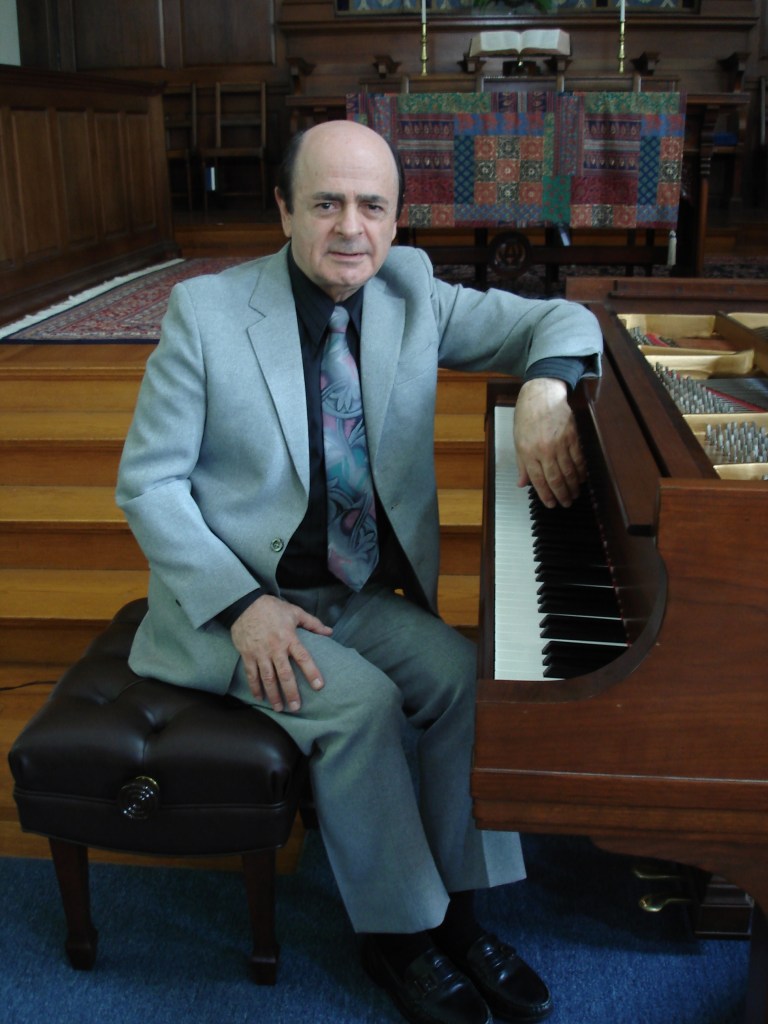
In this post, Israeli concert pianist, teacher, and writer Rami Bar-Niv writes about his own personal performing experience and offers some helpful tips and suggestions. Rami has already written a highly popular series for this blog discussing piano technique, which you can read, here.
I am a concert pianist. For more than 60 years I have been performing all over the world with gruelling programmes on gruelling concert tours, tiring travels by airplanes, cars, buses, boats, ferries, and trains, often not under the most comfortable conditions. My repertoire on these tours had to include 2-3 different recital programs and 2-3 different concertos. I never had bad concerts. I was always prepared and in top shape. There simply was no other choice. No one would accept anything less than that.
How did I do it?
Let me assure you, I am no genius; it’s all hard work and dedication, like the saying goes: “95% perspiration and 5% inspiration.”
I was and still am a practising fanatic. In my heyday I practised for hours daily. It was between five and ten hours a day. I learned my concert programmes inside out, that is, by memory of course. I had to be prepared thoroughly. My motto was to be prepared 200%. This way, if for any reason I lost even 100%, I still had 100% left…
I was often asked if drinking alcohol helped me overcome any performance anxiety, and the answer was:
“yes, of course, I play so much better when the audience drinks…”
But, why refer to the subject as performance anxiety? I’d rather call it performance joy. I feel that a lot of the problems people and students have in this respect are put into their minds by their surroundings.
Preparation
The following are my recommendations for joyfully secure performances.
There are two main parts to achieving a good concert performance:
1) Preparation. 2) The actual performance.
I also divide preparation into 2 parts:
a) Learning and getting the material to a performance level.
b) Endless run-throughs.
1a) You must be prepared, know your material backwards and forwards, day or night, awake or asleep, with eyes open or closed, at the keyboard and off the keyboard. Know your pieces at “half” speed, at “double” speed, and at a variety of different rhythms and articulations. Be able to start at any given random spot in the piece. Analyse your pieces from all aspects: form, structure, harmony, melody, counterpoint, rhythm, technique, fingering, and Schenker’s theory if you’re so inclined. For preparing concertos I recommend practicing a lot with a second-piano accompaniment and/or practising with “Music Minus One” recordings, or even with simply a regular normal piano and orchestra recording of the concerto.
1b) Run-through the material in front of any possible audience, from your pets or stuffed animals to a few people at church, synagogue, lunch club, or an open-mic event at a restaurant, at your place or visiting friends/family, old age home or any small party, etc.
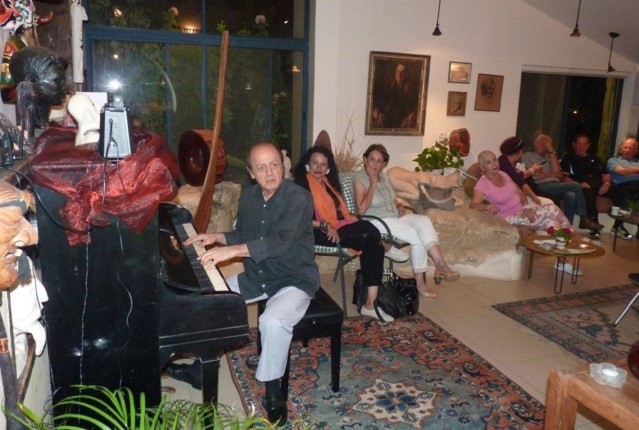
A recording device is also an “audience” and it actually serves two purposes, as in addition to being an “audience” you can listen back and learn from it. Practising performing through some distractions can also be helpful. Distraction can be an open radio or TV, noisy surrounding, someone trying to talk to you while you play, anything else going on at the same time, etc.
Also practice performing dressed up in various costumes:
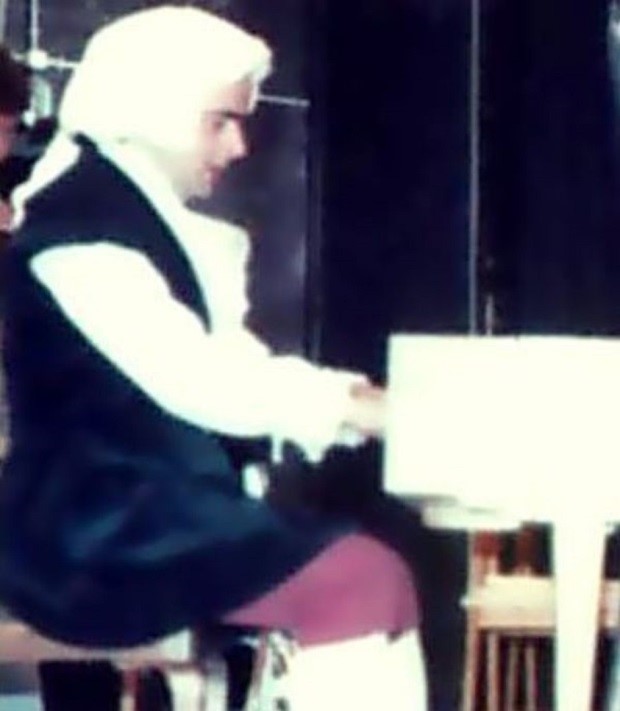
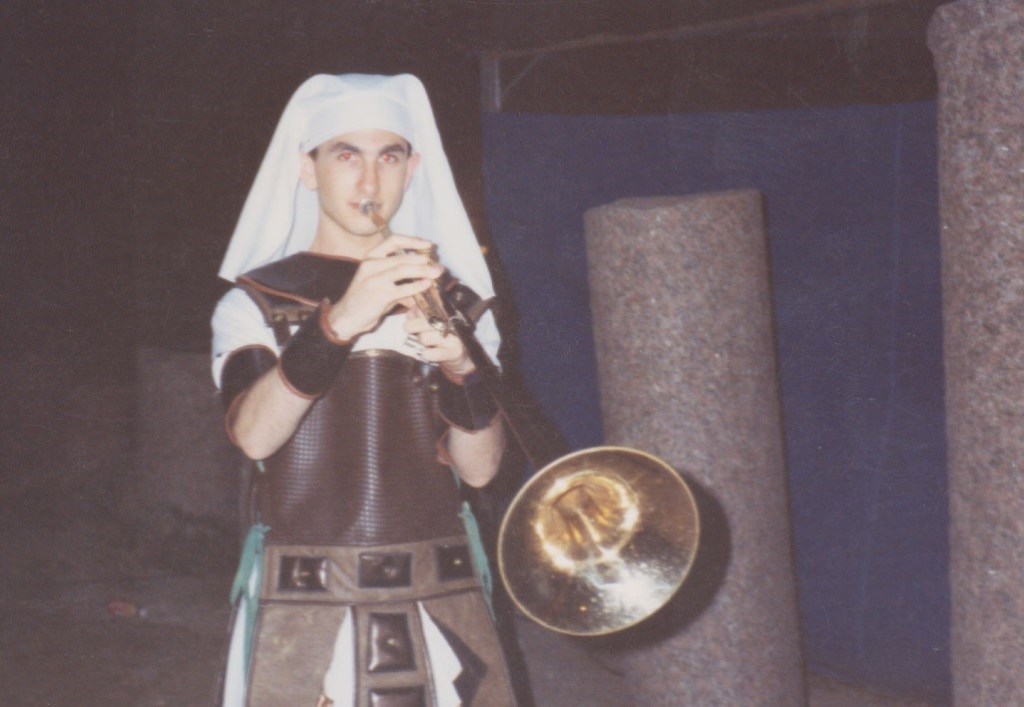
and/or wearing various hats:
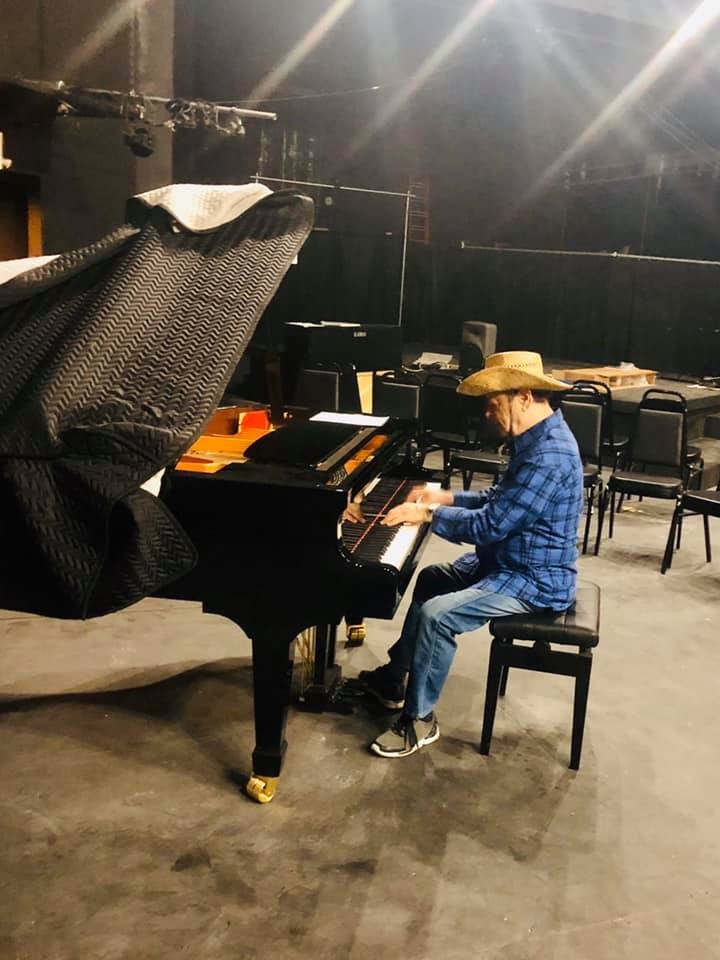
2) Practice Yoga, Meditation, Alexander Technique, Feldenkrais, etc.
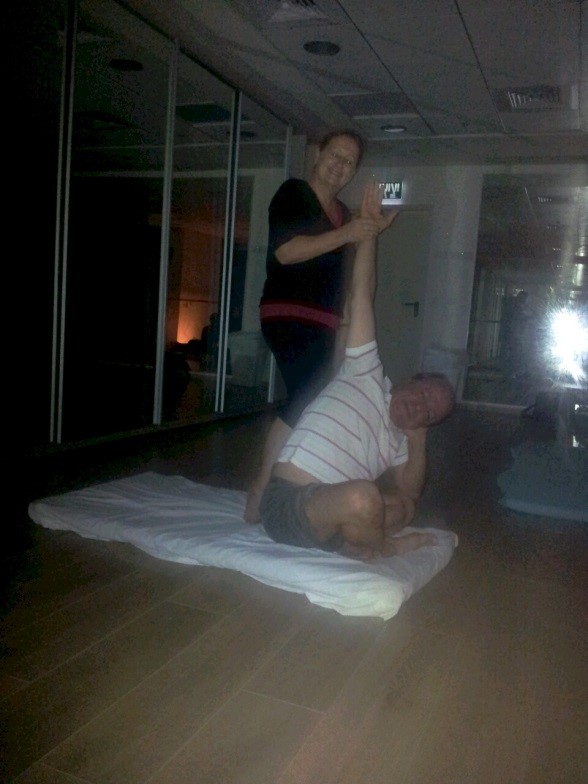
If you think you suffer from performance anxiety, there are various methods and treatments that are available, like Biofeedback, TFT (Thought Field Therapy) tapping technique, EMDR (Eye Movement Desensitization and Reprocessing) therapy, CBT (Cognitive Behavioural Therapy), and others.
You might even like to try hypnosis treatments – they are powerful.
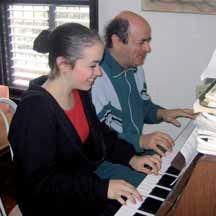
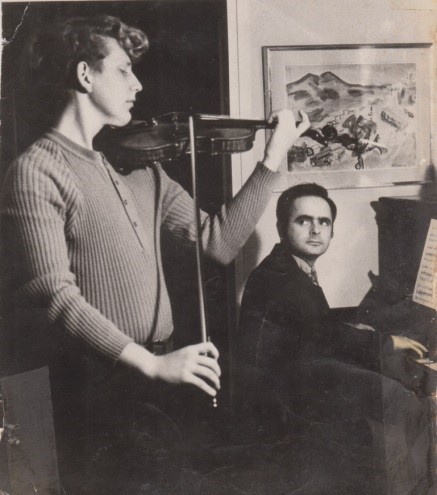
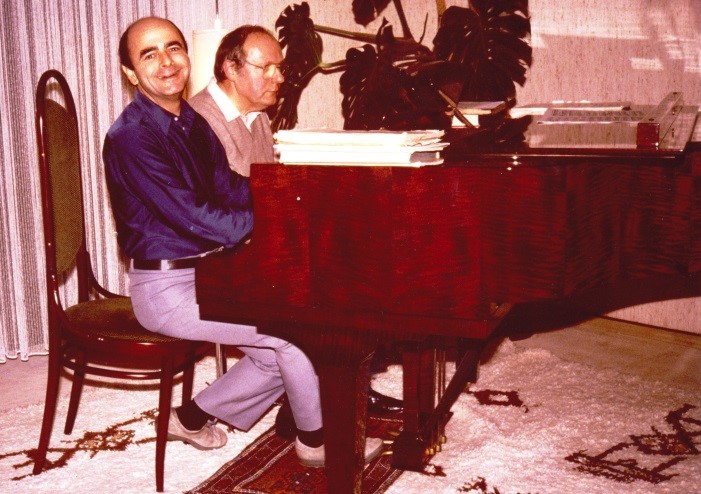
Playing duets and participating in various ensembles also help reduce performance tension:
Warming Up
You need to warm up properly before performing. Many people warm up playing fast scales, arpeggios, exercises, and etudes. I just play my repertoire for the concert, but I warm up by starting slow and soft. Of course there are plenty of warm-ups one can do prior to sitting at the piano. Things like push-ups, sit-ups, rope jumping, running around the block, stretches, etc. In cold climates and in winters wear gloves, and perhaps even soak your hands in hot water. Glenn Gould, for example, used to soak his hands in hot wax.
If you have real performance anxiety that causes physical symptoms like sweaty hands, shaky hands, etc., see a doctor about beta blockers. They are not going to make you play better, nor help you be better prepared. They are going to enable you to realise your potential and perform to the standard you have prepared yourself. They are not addictive and can be used per individual cases and performances.
The Concert Day
Here is the concert-day routine I try to follow as much as possible:
In the morning of the concert day, or if I had the luxury of being there a day earlier, I would check the hall, the stage, the piano, and the seat, as well as practice.
In the early afternoon I would eat, drink (not alcohol), shower, sleep, and have coffee.
In the late afternoon or early evening I would go to the concert hall, adjust the height of the seat, and practice on the concert piano on the stage.
So, in addition to being prepared thoroughly, which is the absolute first condition to any success, sleep well, eat well, drink a lot (not alcohol), do sports and stretches, eat a banana prior to performing, and warm up properly.

Good luck and enjoy your performance!
Blood, Sweat, and Tour: Notes from the Diary of a Concert Pianist

Hi Melanie,
Nice to know how the preparation and daily practice are done by a concert pianist,
there is also something to learn from that, and Rami is certainly also a great concert pianist.
Thank you for posting!
Thanks, Martin. So glad that you enjoyed the article!