
During the past year I’ve been teaching at Royal Holloway, which is part of the University of London. Employed as an external faculty lecturer, I’ve been working with undergraduate and postgraduate students. Every Monday I took the bus to the campus, which isn’t far away from where I live in Windsor, Berkshire. One morning, during a lesson break when a student didn’t turn up, I heard my e-mail ‘ping’ and, rather unusually, it was a message from Thailand; an invitation to judge a piano competition in Bangkok, and as the invite was only a few months before the event, I naturally thought it to be online. But I soon realised that it was an invitation to visit Thailand to adjudicate, or judge, a piano competition. What fun, I thought, especially as I had never been to Bangkok.

It didn’t take long for me to accept the invitation – precisely 10 minutes, in fact – the time it had taken to work out how I would manage my lessons during that particular week in June, as the academic year had not yet finished.
Fast forward four months, and I was on my way to the Thai capital to enjoy two days of non-competitive festival classes and a day of workshops for piano teachers. Such trips take much planning and negotiation, and one never knows exactly what to expect upon arrival. I needn’t have worried. The 3rd CMTG Piano Competition and Festival was quite simply the most welcoming and well-organised piano festival with which I have ever had the good fortune to work. Every little detail had been meticulously planned from the greeting at the airport and hotel and food preferences (I’m a vegetarian), to the beautiful modern concert venue and carefully structured ‘sessions’ in which the nearly 200 competitors participated.
During my two days of rest before work began, I was treated to a ‘Temple Tour’, offering an opportunity to absorb Thailand’s fascinating history and spiritual beliefs, followed by several much-appreciated spa treatments for which the country is renowned. On Saturday the festival commenced, and what a pleasure it was. There were six ‘sessions’ on that day each lasting around an hour and competitors were grouped in order of their current standard; there were the expected ‘graded’ classes, from initial level up to diploma exam standard (teachers in Thailand mainly use British examination boards such as the ABRSM and Trinity College London), as well as recital classes and those which focused on a particular musical period or particular composer.
The standard was reasonably high. I have come to expect excellent levels of playing throughout Far Eastern countries. As is the custom in this part of the world, all students played from memory and most were very comfortable in what is undoubtedly a stressful situation: the room was packed with parents and teachers all clutching their mobile phones, eager to capture ‘the moment’ forever. However, the fact that classes were non-competitive meant that I didn’t have the unenviable job of awarding winners, and competitors didn’t suffer the humiliation of not receiving a prize. All students received a mark, a comment sheet, a certificate, and a lovely gold trophy. After every session, I spoke briefly about my thoughts on the class, the level of playing, what I had enjoyed, and what, perhaps, needed more attention. Interestingly, the festival’s team was keen for students to receive honest feedback as opposed to just encouraging remarks, as they believe competitors only learn from improvement suggestions, and I certainly agree with this sentiment.

Competitors were lucky to play a new Yamaha CFX instrument which was gorgeous – I very much enjoyed playing it during my workshop for teachers. This instrument did cause issues for some though; projecting in a large room takes some getting used to, and balance between the hands was often out of kilter purely because most students never get the chance to play or practice on such a large instrument with an exceptionally powerful bass. Generally, students were well prepared and most felt that the experience was a positive one and that they had learned a lot from the opportunity.
On Sunday I continued adjudicating, but, somewhat unusually, all competitors were online and had pre-recorded their performance; this allowed those who live in other parts of the country and weren’t able to visit the capital, their chance to participate. A large television was set up in the recital hall and the festival’s excellent team ran each video so that I could write my comments which would be sent to participants.
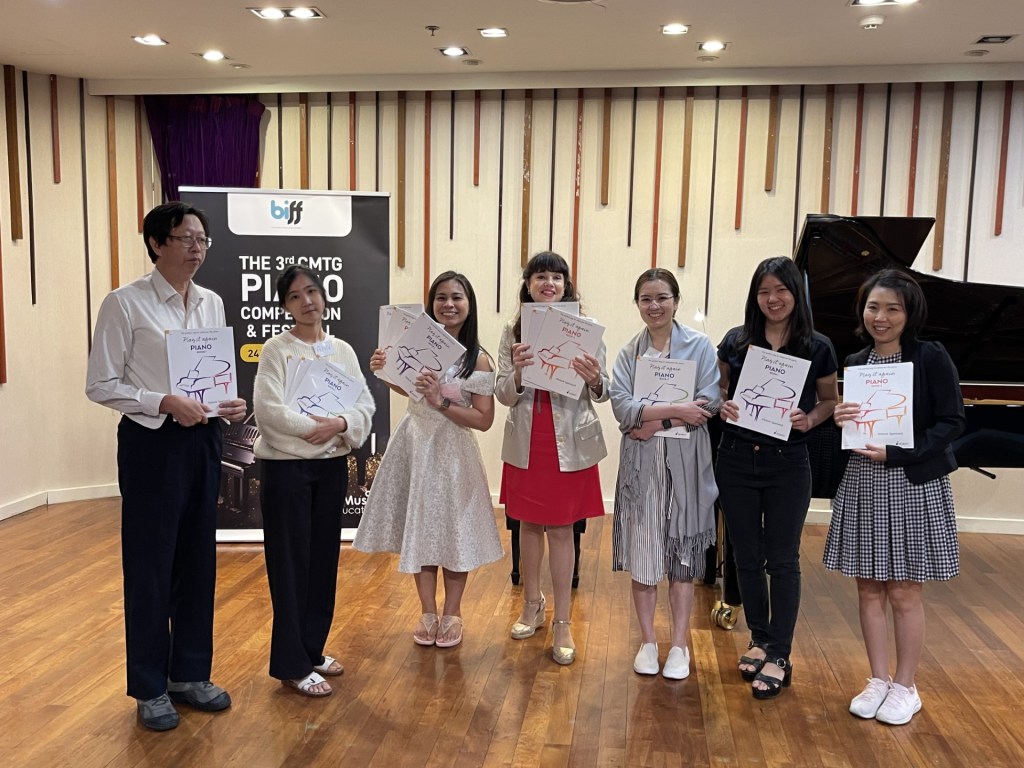
Part of my contract included a four-hour piano technique session for teachers, which was held on Monday after the festival had ended. This workshop was considered a ‘pilot’ for future endeavours in Bangkok. Such an event had never been held before in the Thai capital and therefore we had a small class of brave teachers. I worked with them through four of my technique workshops and they seemingly enjoyed the experience as I was immediately engaged to repeat them in a much larger setting next year.
On my travels, I have found that countries in the Far East respect music education. It’s a privilege to work in this part of the world where everything one does is not just appreciated but valued. Every single student performing at the festival was immaculately dressed. You may feel this is of little importance and not everyone can afford to look good. This may be true, but it’s considered part of the whole performance in the Far East; girls don their sparkly concert dresses and boys wear bow ties. It’s this type of attention to detail that fosters the importance of a piano competition as an ‘event’ in the student’s life – it’s regarded as something to be valued and treasured.
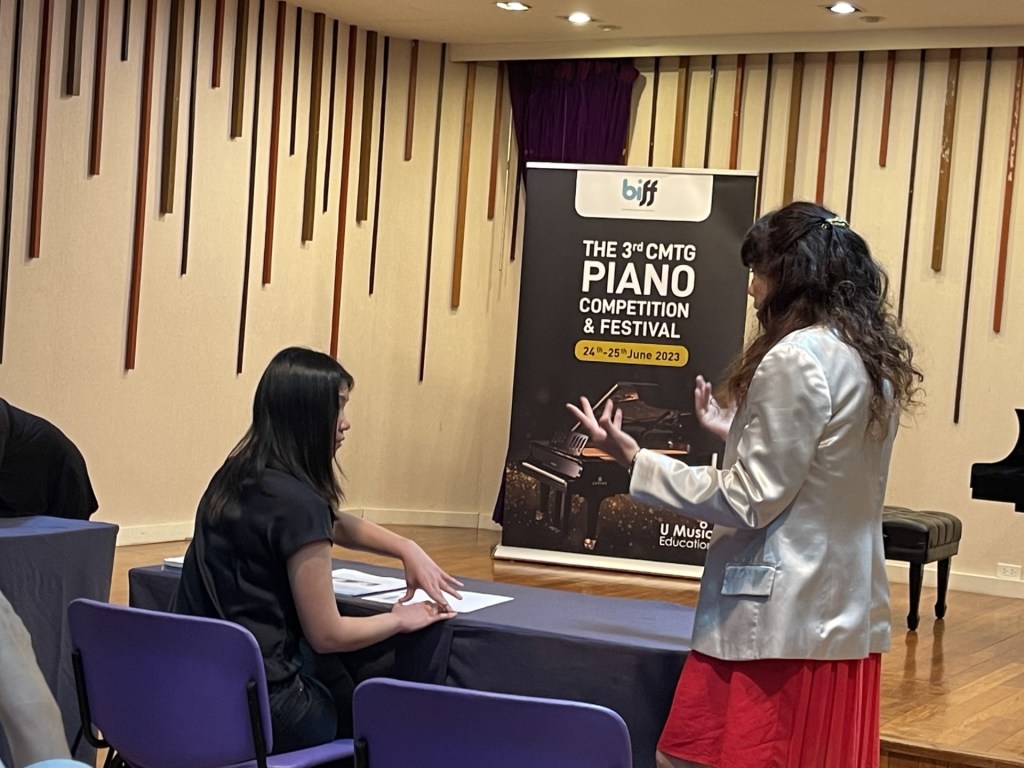
Reflecting on the trip, I can’t help but recall the many splendid performances by the competitors, all entailing hours of dedicated work and practice not just by the students, but also the vital input from teachers and parents.
