
My Piano Pedagogy Spotlight series has proved popular. In this second series of interviews, concert pianist and piano professor James Kirby throws light on his career over a series of five posts.
James has an interesting background: he studied the piano at the Moscow Conservatoire and was a semi-finalist at the International Tchaikovsky Piano Competition in 1990. He enjoyed playing with the Barbican Piano Trio for over thirty years, and currently teaches the piano at the Royal Welsh College of Music and Drama, Royal Holloway University (London), and Eton College. This first interview focuses on James’ student experience studying in the UK both privately and at the Royal Academy of Music.
When did you begin your piano journey and was there a particular reason that you started piano lessons?
I was seven years old, living in the village of Brigsley in Lincolnshire. We had a small electric keyboard and I was able to work out melodies by ear with my right hand and there was a series of coloured plastic buttons which played chords in the left hand. Apparently I was quite good at fitting the correct chords with the melody, and cried without fail whenever there was a power cut (this was in the winter of 1972)…..
Who was your first teacher and for how long did you work with them?
After a while the electric keyboard was ditched and I was upgraded to my first upright. I was sent to Miss Edith Smith, something of a legend in Grimsby. She was vigorous, enthusiastic and always wore high heeled shoes (she must have been well into her seventies) and I occasionally feared she might topple over. Sometimes she would drive me home after my lesson in her mini still wearing these shoes. Even at this young age I had a sense that these might not be ideal for driving and she drove much faster than either of my parents, which was rather thrilling and slightly scary, as the journey involved several narrow and windy country lanes. Whenever she gave me a new piece to learn, a large tick was pencilled in at the end. I was then told to “get it off”– and when I had mastered it, the tick was finished off with a vigorous right-angled stroke, giving me a proud double sword sign at the end of every piece I had completed. Edith was a really good teacher, very encouraging, yet demanding in terms of detail, and she got me off to an excellent start. After that, I went to St Hugh’s School, Woodhall Spa and learned with William Madin. He was a kind and gentle man and music mattered deeply to him. I made rapid progress, perhaps too much so, and ill-advisedly took Grades 4, 5 and 6 within three successive terms. It looked good on paper, but I was skimming over detail and “winging it” to a considerable degree. One day I was practising furiously for my Grade 6 in one of the practice rooms and it so happened that a School Governor’s meeting was taking place nearby. One of the governors, a certain Christopher Regan, then Director of Studies at the Royal Academy overheard me. To cut a long story short, I was accepted as a Junior Student at the Royal Academy of Music in London and got a music scholarship to Oundle School.
What are your first performance memories?
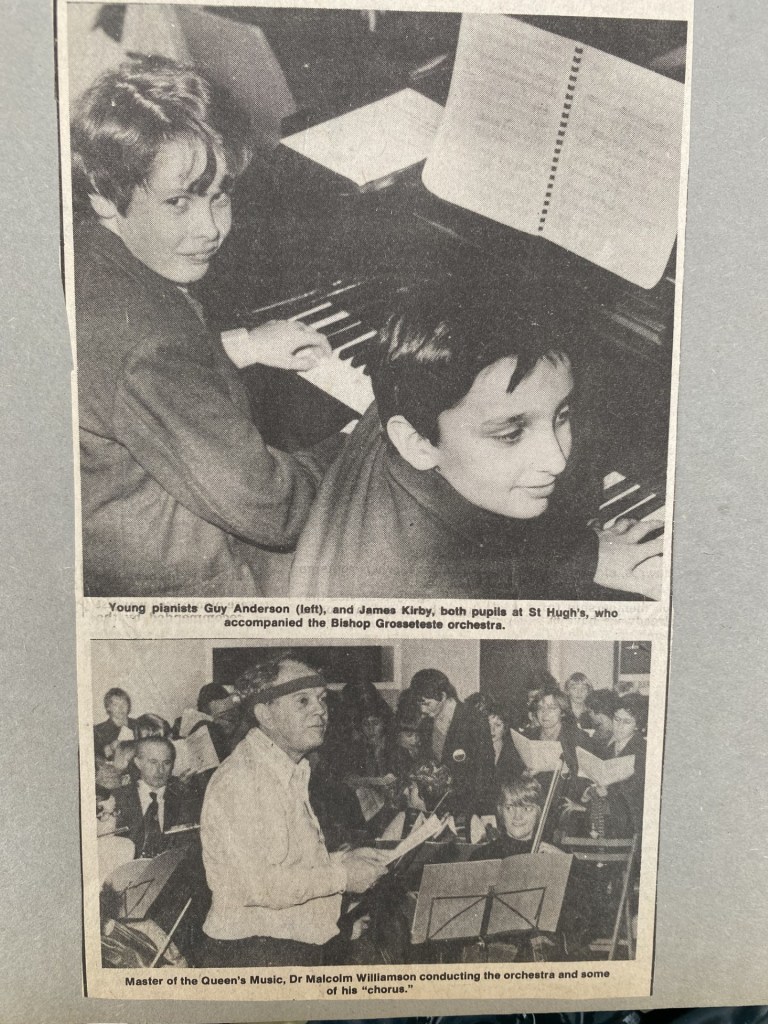
One of my earliest performing memories was at St Hugh’s School, when the school put on “The Terrain of the Kings”, a children’s opera by Malcolm Williamson, who was then Master of the Queen’s Music. I played one of the piano duet parts and remember the sense of responsibility of counting all those tricky rhythms and especially the rests (I wasn’t so good at that). Then there were the annual concerts in the Dukes Hall at the RAM – Mozart’s ‘Variations on ‘Ah, vous dirai-je, Maman’, Liszt’s ‘Waldesrauchen’ and Prokofiev’s Third Sonata Op. 28 – what enormous pieces they seemed then!
There was a life changing moment at Oundle. I can remember how I felt as if it was yesterday. There were three very fine pianists in their A level year and the end of term concert featured them playing a movement each of Mozart’s Piano Concerto in D minor K 466 with the school orchestra. I listened to the rehearsals and concert and had a totally overwhelming feeling that this was what I had to do. My dream came true and I really felt that I had “made it” when I got to play the first movement of the Grieg concerto with the school orchestra two years later! This concert was slightly tempered by another incident. As a second study percussionist I was also required to play the cymbals in Elgar’s Three Bavarian Dances. This I managed successfully, but for some reason, when the orchestra was playing the next piece, the first movement of Mozart’s Symphony No 40 K. 550, I decided to put the cymbals back on their stand and dropped one…..
Did you enter many competitions as a young pianist?
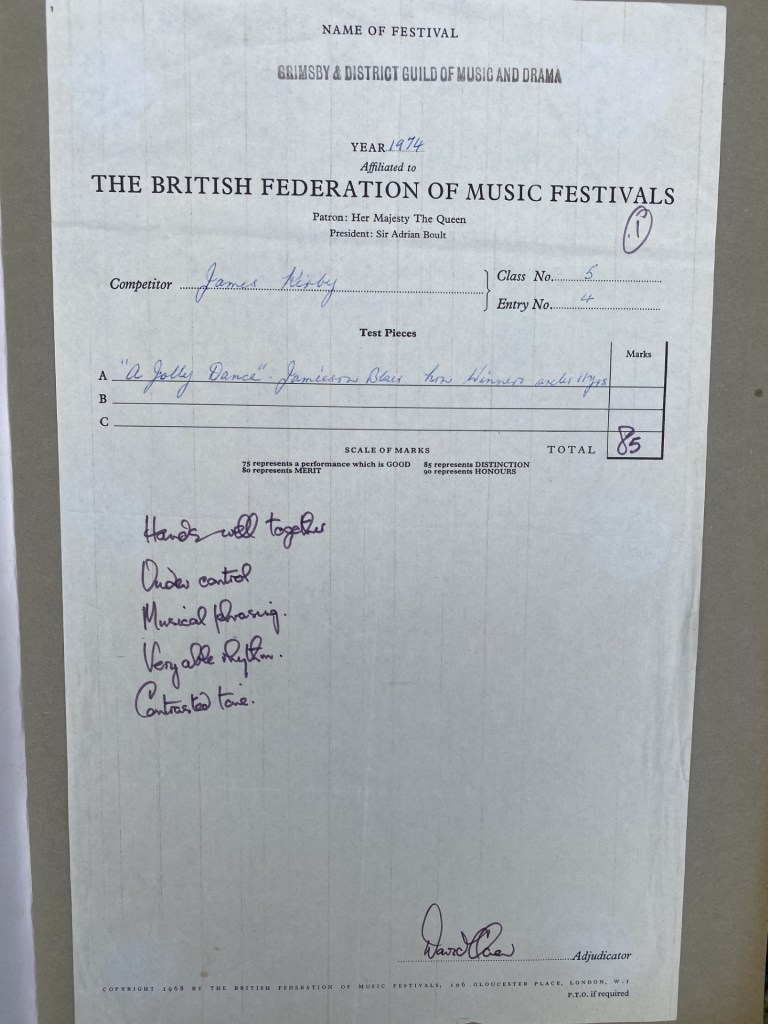
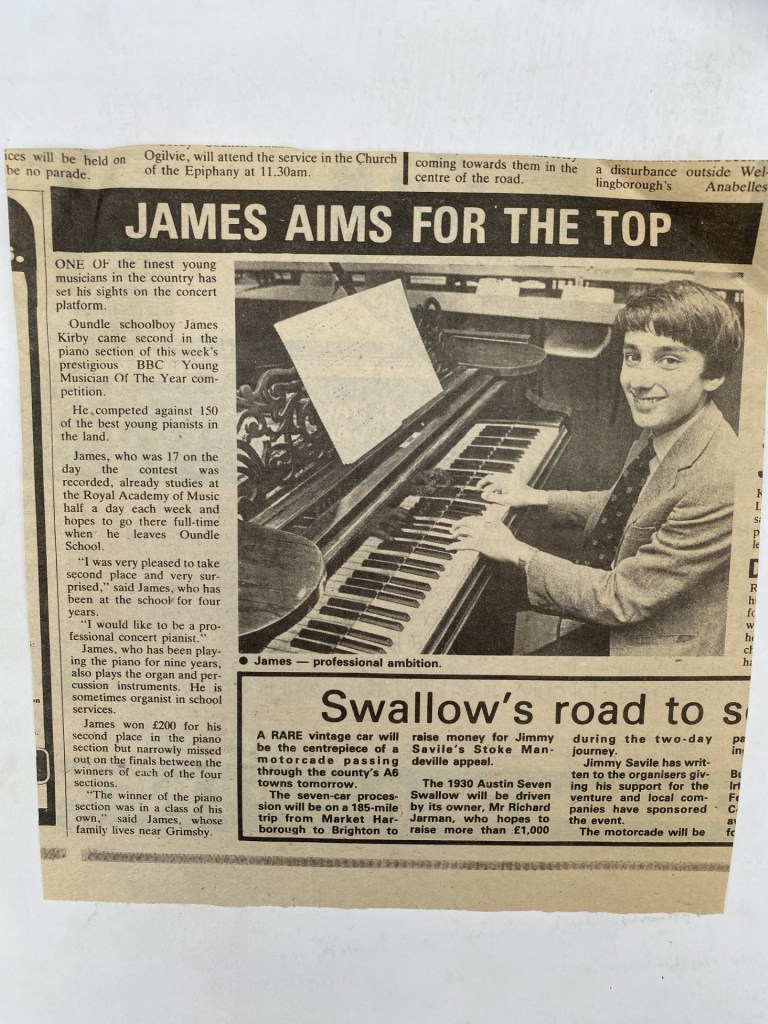
I took part in the local music festival, the Bradley Festival in Grimsby, and have a pile of yellowing certificates lurking somewhere. I did the School Music Competition whilst at Oundle, of course. I had a couple of attempts at the BBC Young Musician of the Year and managed the second round in 1980. In 1982, I reached the piano semi-final stage and headed to the Royal Northern College of Music in Manchester. It was shown on prime time TV in those days and I can vividly remember the feeling of going on stage and feeling the brightness, dryness and heat of the television lights. I got through to the final, and received second prize. It felt very strange going home and not being able to tell anybody, as it was due to go out on TV a few days later. When the programme did come out, the Headmaster gave the whole school an extra half day off at half term, so I was very briefly the most popular boy in the school.
I also came second in the Surrey Young Pianist of the Year Award in 1982. This was marvellous because it gave me the opportunity to play Liszt’s First Piano Concerto with the Surrey Youth Orchestra, conducted by Anthony Hopkins, and go on tour with the orchestra to Germany. This was my first chance to have a go at the same concerto three times and feel it settle and develop. This is so difficult to organise these days, but the opportunity to play a concerto more than once in a short space of time is so much more rewarding than a “one off”. A few years ago I was playing a concerto for the first time, and the only rehearsal was a “run through” of the piece in the afternoon – no time to look at anything again at all. That was deeply uncomfortable. Anyway, I’m rambling….
Do you feel that the competitive element is helpful in a young pianist’s journey as a musician or is it detrimental?
Of course, Bartók said that “competitions are for horses”, and he was right, but I do feel that, treated with respect and caution, they can be valuable. They give us an opportunity to perform in a pressurised situation, but if we deal with this in a good way, it can be a positive experience for us. It’s a good chance to prepare some repertoire really thoroughly and play it in a high profile situation. The important thing is to aim to deal with the pressure in as tranquil a way as possible, to put the music and our integrity first and see how close we can come to achieving our musical aims. (Of course, all this is easier said than done!)
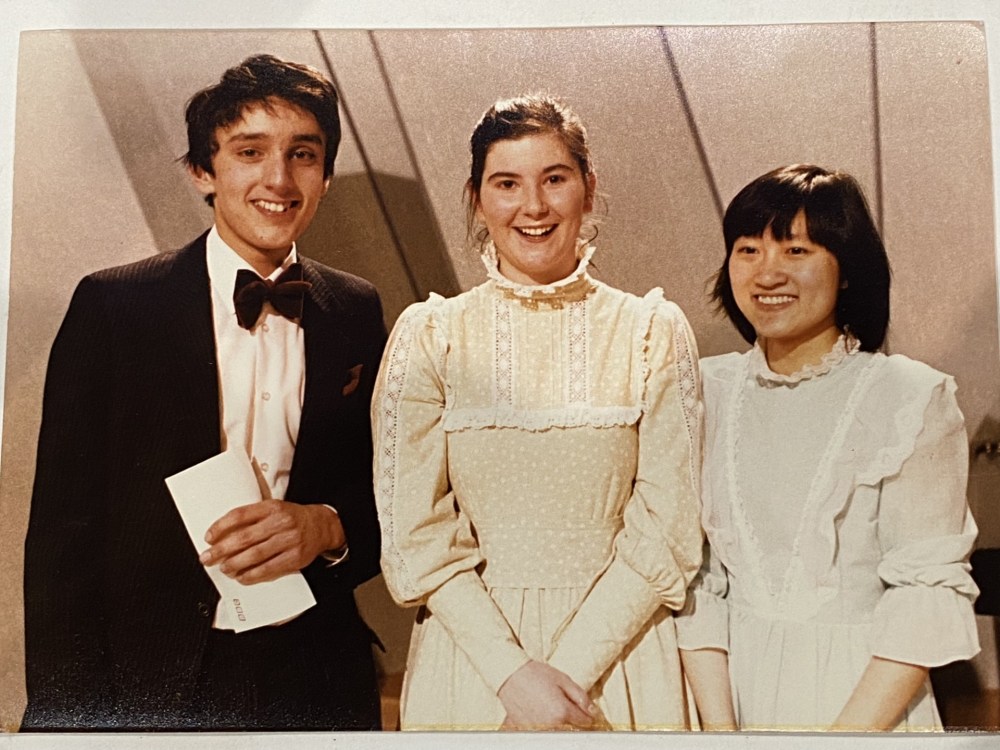
It is also valuable and meaningful to meet fellow competitors, to share experiences, listen to them and learn from them. Your colleagues later in life. I’m amazed how many of my fellow competitors from BBC Young Musician 1982 I am still in touch with.
You studied at the RAM with Hamish Milne. What influence did he have on your playing and what repertoire did you focus on during your lessons with him?
I must mention Jean Anderson first. I started with her at the Junior Academy after I had rushed though Grades 4 and 5 and scraped a merit in Grade 6. With firmness, energy and endless patience, she steered me through those crucial teenage years and gave me a really secure technical foundation. Lessons were detailed and I still treasure her notebooks to this day. I had many extra lessons at her home and she and her husband Frank would come and support me at competitions and concerts. She was even prepared to spend a whole week with me in Manchester when I was doing Young Musician of the Year. Of course I didn’t appreciate it then, but now I realise what huge dedication that was. She was demanding, somewhat scary, but managed to combine a certain degree of fierceness with fun.
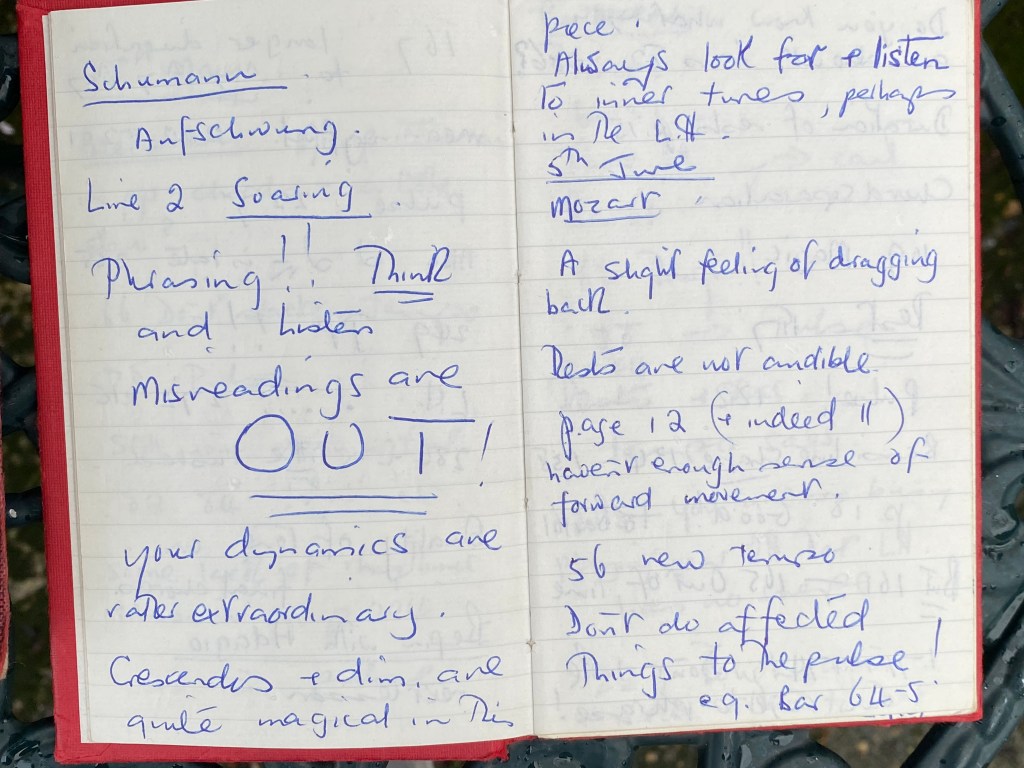
It was quite a big change to go to Hamish, who was also demanding, but in a totally different way.
You have spoken about Hamish Milne’s constant support as a teacher. What was the most crucial advice that he ever gave you as a pianist?
Most importantly and overwhelmingly, his passion for all music (not just piano music). When I saw him for the last time when he was seriously ill in hospital, somehow we got onto the subject of Schumann Overtures, and his eyes lit up when he started talking animatedly about Manfred- Overture. This kind of love for music is incredibly precious and I am so happy that it has rubbed off on me. I am always trying to expand my knowledge and listen to music which I don’t know. Now I am in the middle of a Mahler obsession – I don’t quite know where it came from and at the moment I can’t get enough of him! I heard Haydn’s Symphony No 98 in the car today, and now I want to know it better. Oh dear, maybe the complete Haydn Symphonies are going to be the next thing….
Perhaps I can point you towards my article about Hamish here….

Hamish had a startling ability to produce orchestral effects at the keyboard. When I studied concertos with him and he played the second piano part for me I would hear a viola voice, a horn, a double bass pizzicato, a timpani roll..….no need for an orchestra!
I was lucky enough to page turn for him at many of his Medtner recording sessions. The music is texturally and rhythmically very complex and he had a fantastic ability to portray rhythm and rhythmic accentuation, almost like speech. When I studied Bartók with him, and he showed me some wonderful ways to characterise the folk rhythms and inflections. He was fascinated in Schnabel’s idea of playing long notes slightly longer and short notes slightly shorter, and I loved the suggestion that after the first chord of Beethoven’s Fourth Concerto the next eleven chords should be regarded as upbeats. I’m not even sure if it was Hamish’s idea, or whether he stole it from Schnabel, but it is a great way to think about this opening. I certainly find myself sharing so many of Hamish’s precious nuggets of information with my students these days.

In the second part of this series, James discusses his experience as a student living in Moscow.
Top Image: James plays a red piano in Guangzhou, China.

Thank you Melanie for posting, always interesting how things go with an artist. 🙂
Thank you, Martin. It’s been a fun series to put together and I’m looking forward to publishing the other articles. 🙂