
Until last week, I had attended only one piano pedagogy conference and I had never participated in such an event. After a successful trip to the Far East over the Summer, where I gave three weeks of classes, lectures and workshops, I was invited to present at the UCSI University Piano Pedagogy Conference, held every two years in Kuala Lumpur (Malaysia). It was an offer I couldn’t refuse. I’m accustomed to travelling around the world alone, having done so for years as a young pianist and I find the challenge of working in exotic places simply irresistible.
Piano pedagogy conferences appear the world over, with arguably the most well-known being held in the USA and Australia. The UK equivalent is organised by EPTA (European Piano Teachers Association) and is often a three-day marathon. Most conferences provide a continuous stream of master classes, workshops, and lectures. They also feature recitals and presentations. Various expert pedagogues lead these events intending to inspire teachers and students.
By all accounts, they can be somewhat dull and dry. Groups of teachers meet to discuss such topics as the five-finger position. Luckily, I have found students and teachers in Malaysia in particular, more open to different ideas and teaching practices. This was demonstrated during my Summer trip. Learning and sharing were the order of the day everywhere I worked.
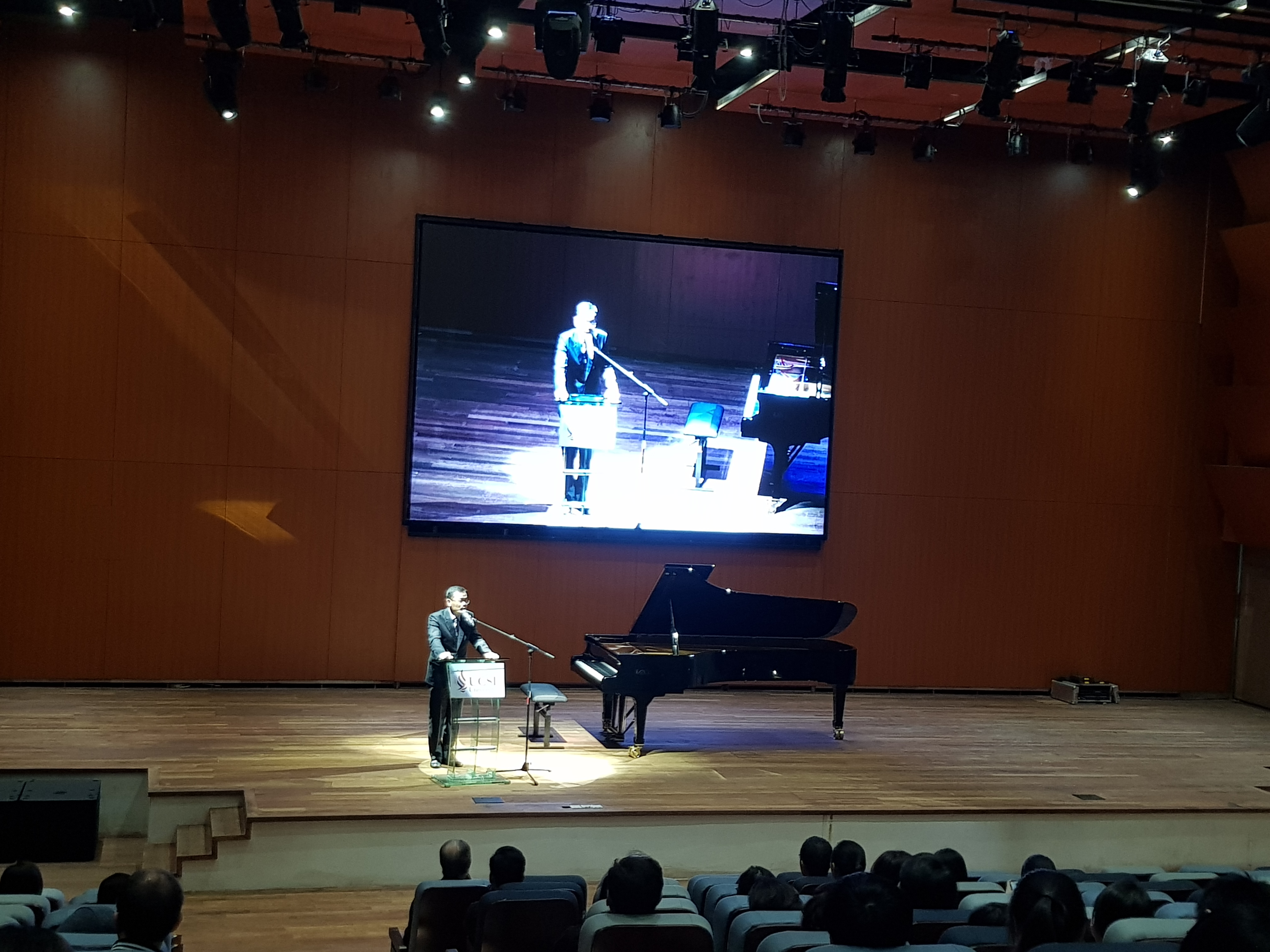
UCSI University is considered the top higher education institute in Malaysia for music. Its Institute of Music is very active and it offers its student body recitals, master classes, and prominent Malaysian teachers. Dr. P’ng Tean Hwa, who runs the department, opened the conference in the concert hall. This institute is thriving. It has a new concert hall and music building which had opened only the day before the conference. Assistant Professor Dr. Christine Tan and her team of organisers had paid meticulous attention to every detail. Their efforts ensured that neither presenter nor participator wanted for anything. I stayed in the hotel on the campus; which, rather like the concert hall, had only opened very recently.
This was the university’s first piano pedagogy conference and it featured two action packed days (6th and 7th November). Conference attendees consisted of a mix of teachers and students. The students were primarily drawn from those studying at the university and they were indeed fortuitous. I don’t remember anything of this nature being held at the Royal College of Music during my student days. The teachers were largely local, although there were some from Indonesia and other nearby countries.
The key-note speaker, Professor Dr. Michael Campbell, provided a series of master classes and workshops. He included an interesting improvisation lecture. During this lecture, four students experimented with ‘group’ improvisation using two pianos. Dr. Campbell closed the conference with a recital which l encompassed a large selection of styles and genres, from Scarlatti and Mendelssohn to Bartók and Fats Waller.
The Plenary speaker, jazz pianist Michael Veerapen, is a renowned figure in the Malaysian jazz scene. Michael gave a master class, several lectures and a jazz concert complete with band. Both speakers participated in a pre-conference event the day before (5th November). They offered further workshops on their specific specialties.
Sandwiched in between the keynote speakers were a group of presenters, including myself. Each presentation lasted 35 – 40 minutes, with a brief Q&A at the end. We spoke on an extensive selection of topics, and those I attended were fascinating. Musicologists picked subjects close to their heart, like Decoding Idiosyncratic Hairpins of Schubert, Chopin and Brahms—Dynamics or Rubato? (given by Dr. Cheong Yew Choong) and then there were the practical workshops, which sometimes required audience participation, such as Nurturing Musical Abilities: A Creative Movement in Piano Lessons Using Dalcroze Eurhythmics Approach, given by Dr. Onpavee Nitisingkarin.
Austrian pianist Dr. Andreas Eggertsberger’s lecture was very informative, focusing on a much debated issue, Focal Dystonia. The talk, entitled Focal Dystonia: My Experience with the Injury, highlighted this debilitating physical problem and many are not even aware of it. Focal Dystonia is, by all accounts, similar to repetitive strain injury or tendonitis. Dr. Eggertsberger carefully plotted his story. He illustrated how he managed to find his way back to relative health. He demonstrated the patience and resilience required to ‘re-learn’ to play by acquiring a more secure, solid technique. Technical issues are frequently the cause of physical injury.

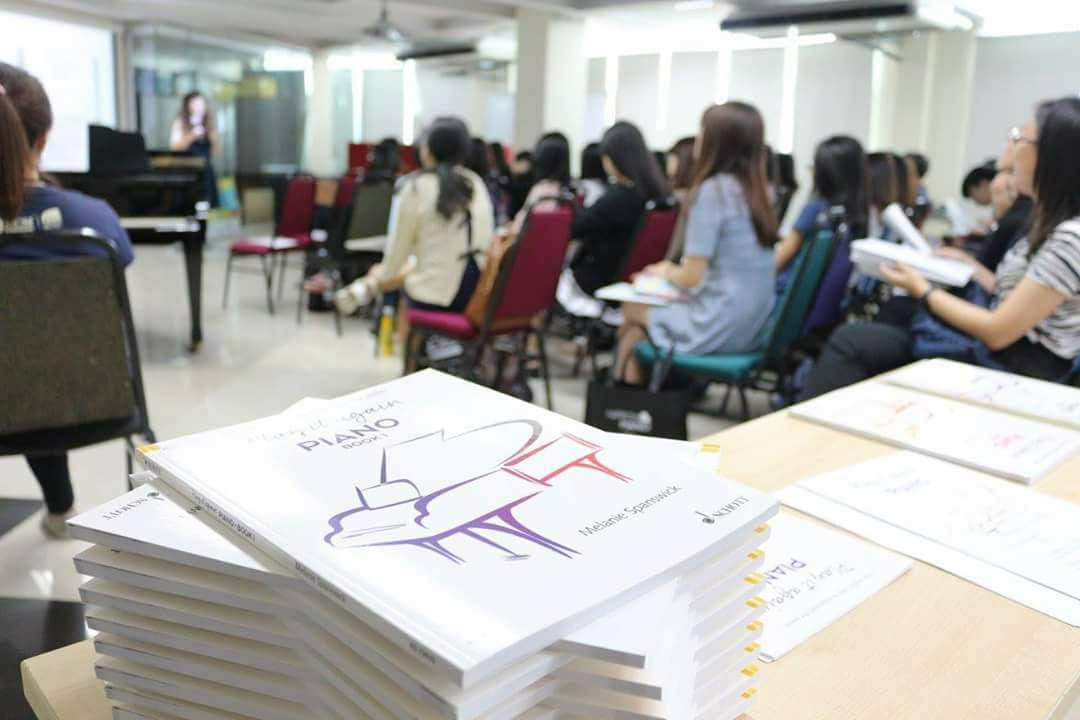
I felt fortunate to be able to talk about my new piano course, Play it again: PIANO . It’s often deemed inappropriate to openly ‘advertise’ your own publications at conferences. However, such rigid views aren’t upheld in this part of the world. My presentation entitled Developing an Effective Programme for Those Returning to Piano Playing, highlighted the need for this student demographic to have a progressive, graded collection of pedagogically sound pieces. It emphasised providing plenty of technical help to enable them to easily re-acquaint themselves with the instrument. My lecture was indeed popular (with around 75 in the audience; as seen in the photo below) and a fair few books were sold too.
We were treated to a splendid array of culinary delights over the two days, including a variety of tasty Malaysian dishes, all included as part of the conference. During these extended breaks, teachers and students could mingle, network and discuss the pleasures and perils of piano teaching. There was an opportunity to purchase piano music and piano memberships. The trade floor in the building’s basement also offered instruments for sale.
I really enjoyed making new friends and acquaintances, and found the whole event a stimulating, worthwhile learning experience. I hope to attend many more piano pedagogy conferences in the future.
