
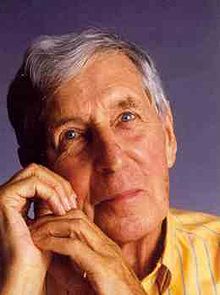
This year marks the twentieth anniversary of Sir Michael Tippett’s death (1905 – 1998). The British composer’s life spans almost the entire Twentieth century. His music was often ranked alongside that of Sir Benjamin Britten. The pair were considered the leading British composers of the day and of the Twentieth century. Tippett’s talent developed slowly. He only reached prominence just before the Second World War. After withdrawing all his early compositions, he was thirty before any of his works were published. Despite his fairly prolific output, his music has not always enjoyed the popularity it did during his lifetime.
On Sunday, I had the good fortune to attend a Tippett Study Day held at the City Literary Institute, an adult education college in the heart of London’s West End. The study day was presented by The Beethoven Piano Society of Europe. This organisation strives to spotlight Beethoven’s piano works. They also arrange many interesting concerts and events throughout the year. This event aimed to celebrate the life and work of Sir Michael Tippett on the 20th anniversary of his death. It focused on the composer’s piano music and his intense relationship to the music of Beethoven.
The Society’s chairman Julian Jacobson gave a brief introduction. The day then began with a half hour talk about Tippett’s life. Writer and broadcaster Oliver Soden delivered the talk. Oliver is currently writing a Tippett biography (to be published next year), and therefore his knowledge on his subject was exemplary. The presentation, Tippett – The Piano Sonatas in Context, was the highlight of the day for me. Oliver spoke eloquently about all four piano sonatas, carefully plotting the composer’s life and influences alongside his compositional development.
As a student at the Royal College of Music, much of Tippett’s early piano writing had been pastiche, rendering it of little interest, and therefore it has remained unpublished. The piano was central to Tippett’s work. He used it constantly when composing. Tippett had a natural affinity for piano writing, even though, by all accounts, he wasn’t a virtuoso pianist. However, Oliver persuaded us otherwise, citing various complicated piano pieces that Tippett had performed, certainly indicating a proficient level of mastery.
The day continued with a presentation by Christopher Mark, senior lecturer in musicology at the University of Surrey. This talk largely concentrated on the piano sonatas, and looked at their structure, with comparisons to a selection of Beethoven’s piano sonatas. Christopher identified specific features of Tippett’s style that showed Beethovenian influences. However, I found Tippett’s own compositional process to be the most compelling element.
Tippett employed a Mosaic structure for the Second Piano Sonata. This compositional technique involves repeating certain phrases of music at disparate points. Sometimes these are repeated exactly, but often there are subtle differences. The composer freely dictates the placement of these repetitions. Christopher offered Tippett’s own construction notes; showing us how he devised the work’s structure. There were three different versions. The first displayed the basic outline. The second and third were increasingly detailed. I found this fascinating and it gave us a glimpse into the workings of this fairly unorthodox composer.
After a brief break, the day resumed with a series of open discussions. Firstly, there was a conversation entitled ‘Reflections on Tippett’s Piano Music’. It featured Meirion Bowen, who was Tippett’s artistic and personal manager from 1978 until his death. Andrew Ball, a professor of piano at the Royal College of Music, also participated. Andrew studied the sonatas with the composer, performing them frequently as a cycle. Hosted by Julian Jacobson, Meirion recounted Tippett’s musical experiences, including recurrent difficulties with orchestras and conductors, who were sometimes ill-equipped to deal with such complex scores. Andrew shared his extensive lessons with the composer. Tippett constantly emphasised rhythmic precision and character. However, according to Andrew, Tippett sometimes couldn’t remember the specific notes he had written!
The morning concluded with ‘Tippett, his piano music, and his relationship to Beethoven’. Andrew Ball, Meirion Bowen, Julian Jacobson, Christopher Mark and Oliver Soden, were joined by professor of composition at the Royal College of Music, William Mival, for more Tippett appraisal. This was a chance for the group to offer personal reflections of how Tippett’s music had influenced their own work, and also evaluate his legacy. Tippett’s music is published exclusively by Schott Music, and Sally Groves, who had worked with him at Schott, also shared some valuable insights.
After lunch, the focus was on performance; four master classes all given by Andrew Ball. Pianist Yuki Negishi played the Second Piano Sonata, which was followed by pianist Julian Trevelyan, who played the First Piano Sonata. Both gave committed accounts and Andrew’s very helpful comments were much appreciated by performers and audience members alike. Andrew’s attention to rhythmic detail provided plenty of food for thought; he was also precise about pedalling and creating a specific sound world – particularly when referring to different structural motifs.
The afternoon concluded with further master classes on the song cycle, The Heart’s Assurance. Ruth Hopkins (soprano) and Duncan Appleby (piano) performed it. Finally, Thomas Ang played the Fourth Piano Sonata. Julian gave a closing address to this most enlightening and thought-provoking day. Many thanks to The Beethoven Piano Society of Europe for their superb organisation and hospitality.
